
EcoFlow Delta Pro Ultra: Whole-Home Backup, Explained

Advertisement
The grid goes down at 2 a.m. in February. No warning — just the heater ticking off and the house going quiet in a way that wakes you up. Now the clock starts. The chest freezer in the garage has a quarter elk and a summer of fish in it. The well pump won't lift water without power, so the taps are dead. If anyone in the house runs a CPAP, an insulin fridge, or an oxygen concentrator, this stopped being about comfort the second the lights blinked.
A rolling blackout is the wrong time to learn your "backup power" can run a couple of lamps and not much else. So we dug into what an EcoFlow Delta Pro Ultra is realistically able to carry when it's tied into a house through its transfer panel — well pump, fridges, freezers, furnace blower, the works — and where it runs out. Here's what the specs say.
What you're actually buying: the house keeps running
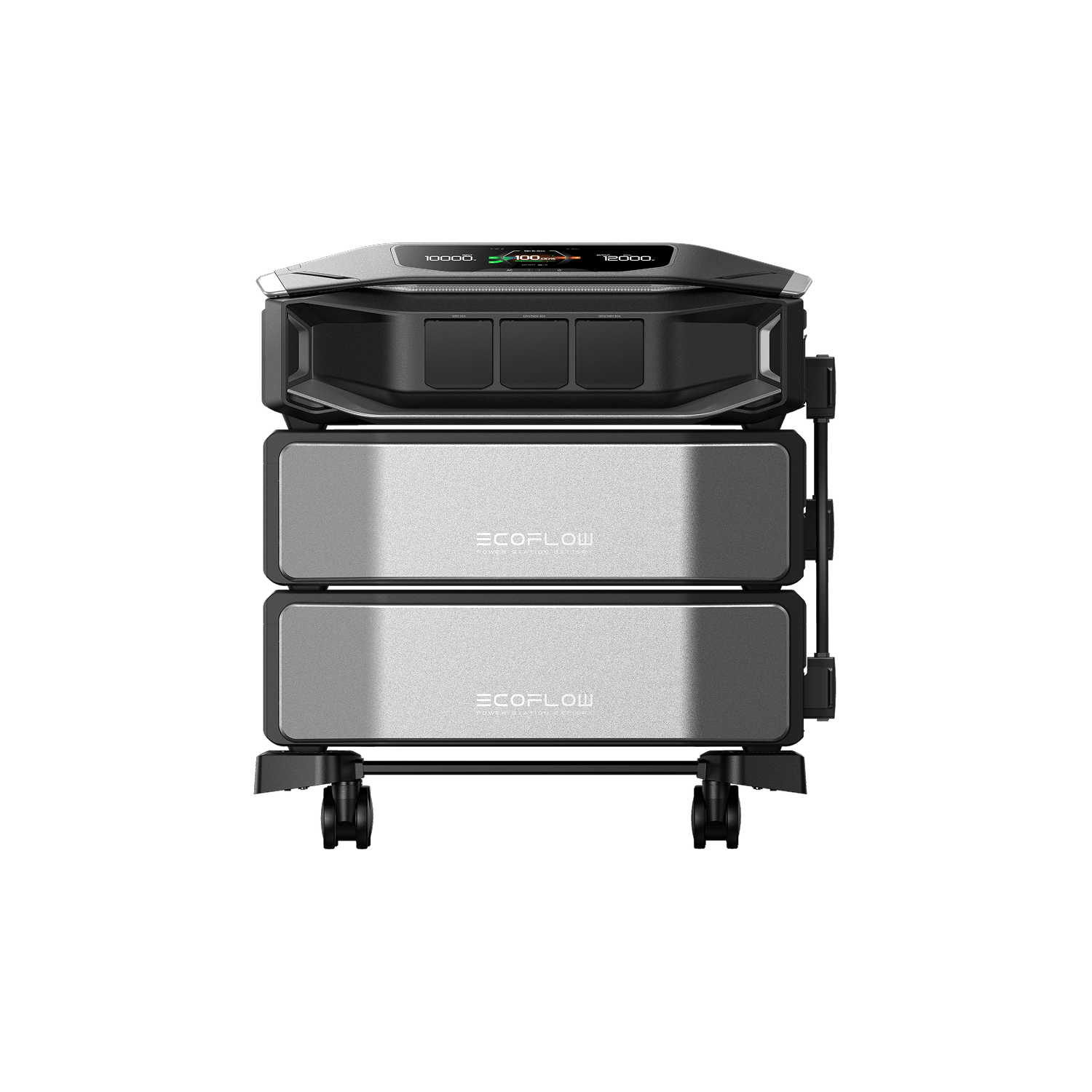
Forget the spec sheet for a second. What the Delta Pro Ultra buys you is a blackout nobody in the house really notices. The fridge stays cold. The freezer full of meat you worked for stays frozen. The well pump lifts water so the toilets flush and the showers run. The furnace fan keeps the heat moving so the pipes don't freeze. That's the product. Everything else — the watt-hours, the inverters — is just how it delivers that.
The thing that makes it work is real 240V split-phase power. Most "big" power stations only put out 120V, which means the appliances that actually matter in an outage — your well pump, your central AC, an electric range or dryer — simply won't run. The Delta Pro Ultra puts out a clean 7,200W at 120V and 240V from a single inverter, so it runs the heavy stuff the cheaper boxes can't touch. That's the difference between "I can charge my phone and run a fan" and "the house works."
What it can realistically carry
The common whole-home setup is one inverter with two batteries (about 12 kWh), tied into the panel through an EcoFlow Smart Home Panel 2, which is what turns this from a big battery into actual whole-home backup.
On paper, that setup covers the loads that matter: the fridge, a chest freezer, the well pump's hard startup surge, the furnace blower, lights, and a rotating cast of laptops and phones. The 7,200W headroom matters most in the half-second a pump or compressor kicks on — that surge is what trips smaller units into shutting down. With moderate use (fridge/freezer cycling, well pump on demand, lights at night), about 12 kWh works out to roughly a day of runtime, depending on what's cycling; if you want to ride out a multi-day outage without rationing, you add batteries.
And that's the real argument for it: it grows with you. Start with one inverter and a battery, and when the budget allows, stack up to 15 batteries for 90 kWh, or three inverters for 21.6kW. You're not buying a fixed box you'll outgrow — you're buying the foundation of a system that can eventually run an entire home indefinitely on solar.
Sun into power — so the outage has no clock
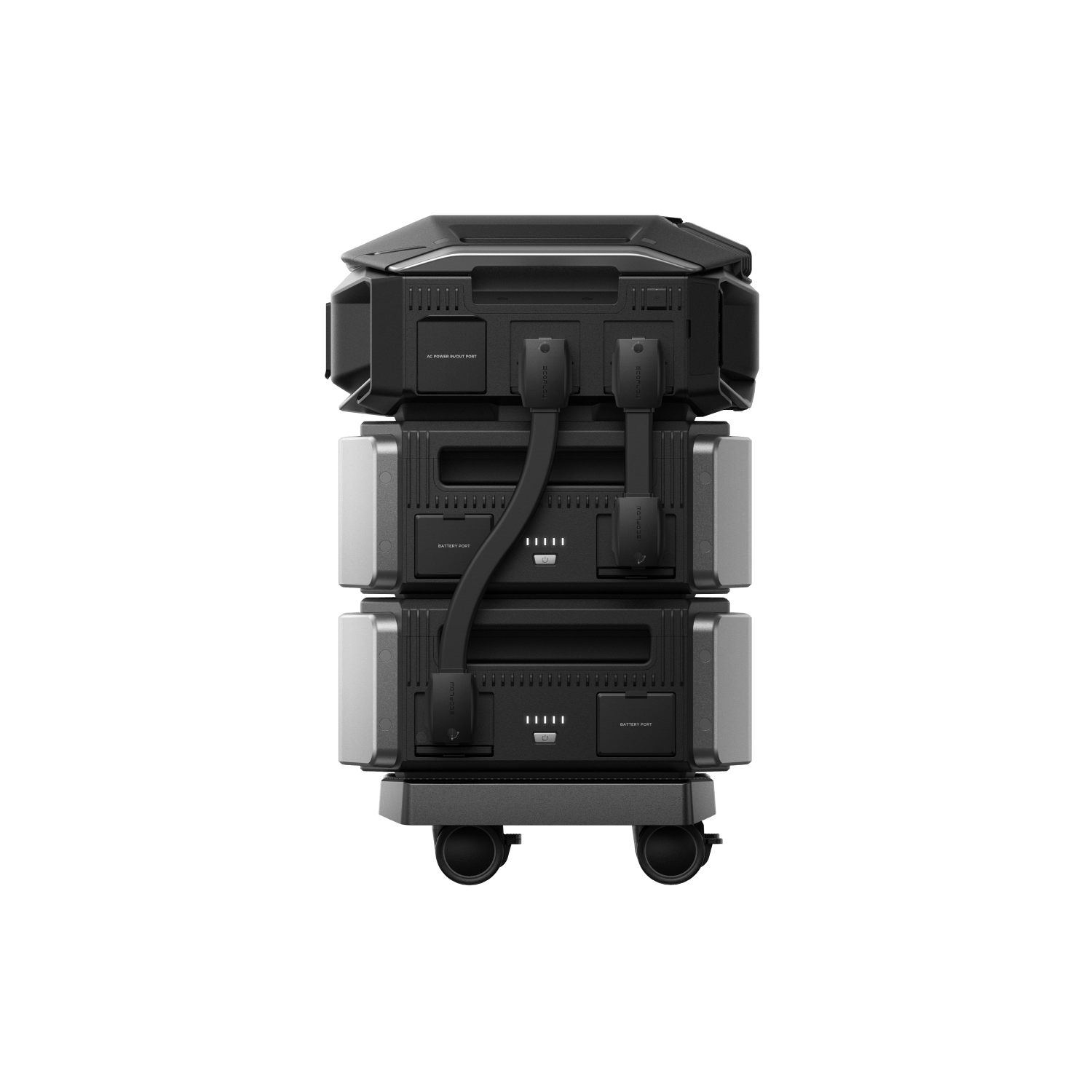
A battery alone has a deadline. Pair it with panels and the deadline disappears. The Delta Pro Ultra takes up to 5,600W of solar into a single inverter (16.8kW across three), which on a decent day is enough to refill a meaningful chunk of what the house pulls overnight. A sunny afternoon can put hours back on the clock while you do nothing. That's the moment "expensive battery" turns into "this could keep my family running through a week-long event" — the thing the grid can't promise you anymore.
The honest take — where it bites
This isn't a weekend impulse buy and we won't pretend otherwise. Three things you should walk in knowing:
It's heavy — genuinely. Each battery and inverter is a two-person lift on built-in wheels. This is a "roll it into the utility room and leave it" device, not a grab-and-go for the truck. If you want portable, look elsewhere in the lineup.
The real cost is the full system. The entry setup starts around $4,099, but whole-home backup means the Smart Home Panel 2, professional install into your service panel, and ideally solar — that's a several-thousand-dollar project, not a one-box purchase. Budget for the system, not the headline price.
It's overkill for small needs. If all you want is to keep a fridge and a few devices alive for a few hours, you're paying for capacity and 240V output you'll never use. Buy down to your actual load.
None of that is a knock — it's just the truth about what this class of device is. Buy once, cry once: the people who regret a power station are the ones who bought too little and found out during the outage. This is the other end of that mistake.
The specs (the evidence, not the pitch)
Spec | Delta Pro Ultra (per unit) |
|---|---|
Battery capacity | 6,144 Wh (expandable to 90 kWh) |
AC output | 7,200W (up to 21.6kW with 3 inverters) |
Voltage | 120V / 240V split-phase |
Solar input | Up to 5,600W per inverter (16.8kW max) |
Whole-home | Via EcoFlow Smart Home Panel 2 |
Entry price | ~$4,099 (1 inverter + 1 battery) |
The verdict
If you've ever sat through an outage doing math on how long the freezer has, the EcoFlow Delta Pro Ultra is the one that ends the math. It runs the appliances that actually matter, it doesn't choke on startup surges, it refills from the sun, and it grows from a single-room backup into a whole-home system as your budget allows. It earns the Top Pick not because it's cheap — it isn't — but because it does the one thing you're buying backup power for: it keeps your house running when the grid won't. Check the current price and bundles →
FAQ
Can it really run my whole house? With the Smart Home Panel 2 and enough batteries, yes — including 240V loads like a well pump or central AC that most power stations can't touch. How long depends on how many batteries you add and whether you pair it with solar.
Do I need an electrician? For true whole-home backup, yes — the Smart Home Panel 2 ties into your service panel and should be installed by a licensed electrician. You can also use it as a large portable station without the panel.
Is solar worth adding? If you're preparing for multi-day outages, absolutely. Batteries alone have a finite runtime; solar is what removes the deadline and lets the system recharge itself during a long event.
Should most people buy the big one? No — and that's the honest answer. If your goal is a few hours of fridge-and-phones, buy smaller. The Delta Pro Ultra is for people who want the house to genuinely keep running, for days, through real outages.
Advertisement
FTC Disclosure: OSS America contains affiliate links. We earn a commission from qualifying purchases at no extra cost to you. Every pick is research-based: specs, verified prices and owner reviews.
More reviews
 Portable Power
EcoFlow DELTA Pro 3 Review (2026): Specs, Real Price, Owner Reviews and Rivals
An honest EcoFlow DELTA Pro 3 review: 4,096Wh, 4,000W, 120/240V, every bundle priced per kWh, what 69 owners say, the either/or 240V catch, and how it stacks up against the DELTA Pro Ultra and BLUETTI Apex 300.
 Portable Power
EcoFlow vs BLUETTI (2026): Which Power Station Gives You More for Your Money?
EcoFlow vs BLUETTI, compared size class by size class: price per kWh, output, weight, cycle ratings, warranty and returns for 1 kWh, 2 kWh, 3 kWh and 240V home backup units, plus which to buy.
 Portable Power
EcoFlow vs Jackery (2026): Which Power Station Gives You More for Your Money?
EcoFlow vs Jackery, compared size class by size class: price per kWh, output, weight, cycle ratings, warranty and returns for 1 kWh, 2 kWh, 3 kWh and 240V home backup units, plus which to buy.
 Portable Power
EcoFlow DELTA Pro Ultra X vs Tesla Powerwall 3 (2026): Which Home Battery Fits Your House?
EcoFlow DELTA Pro Ultra X vs Tesla Powerwall 3, compared from the makers' own specs: capacity, power, solar input, expansion, warranty, weight, installation, pricing and the 2026 tax-credit reality.
 Portable Power
14 Best-Selling Home Power Products of 2026 (Not a Ranking)
Not a ranking — nobody won. Fourteen of the best-selling home power products on the market, with what each one actually does: the watts, the hours, the fuel, the install, and the honest limits. You decide which fits your house.
 Portable Power
Jackery Explorer 1000 v2 Review — The Honest Take (2026)
The Jackery Explorer 1000 v2 is one of the best portable power stations we've researched — but not for everyone. What it does great, where it falls short, and how it compares to EcoFlow, BLUETTI and Anker.