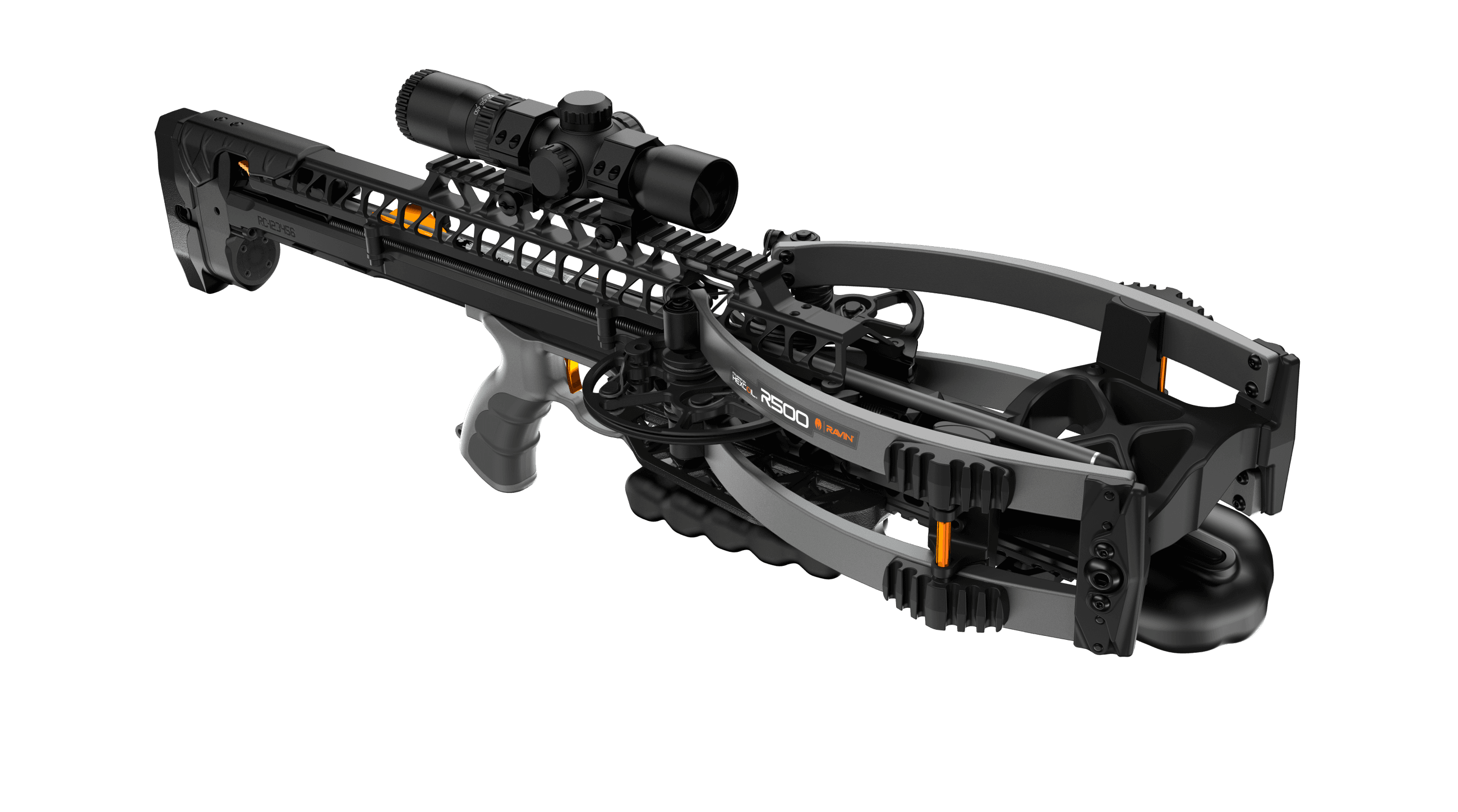
Ravin R500 Review: 500 FPS of Flat, Hammering Crossbow Power
Advertisement
The biggest buck of your life steps into the open at 80 yards and stops — broadside, but a long way off, and not coming closer. A slower bow makes that a prayer. The Ravin R500 makes it a shot you take with confidence. This is Ravin's fastest, most powerful compact crossbow — a 500 FPS, 222 ft-lb hammer built for the exact moment the whole season comes down to a single arrow.
The R500 is not a beginner's crossbow. It's not a "good deal" crossbow. It's the top-of-the-lineup answer for the hunter who's put in the scouting miles and refuses to let equipment be the reason the tag goes unfilled. Below: full manufacturer specs, who this crossbow is really for, who should NOT buy it, three honest alternatives, and the pro tips nobody tells you before you drop $3,000+ on a top-shelf crossbow.
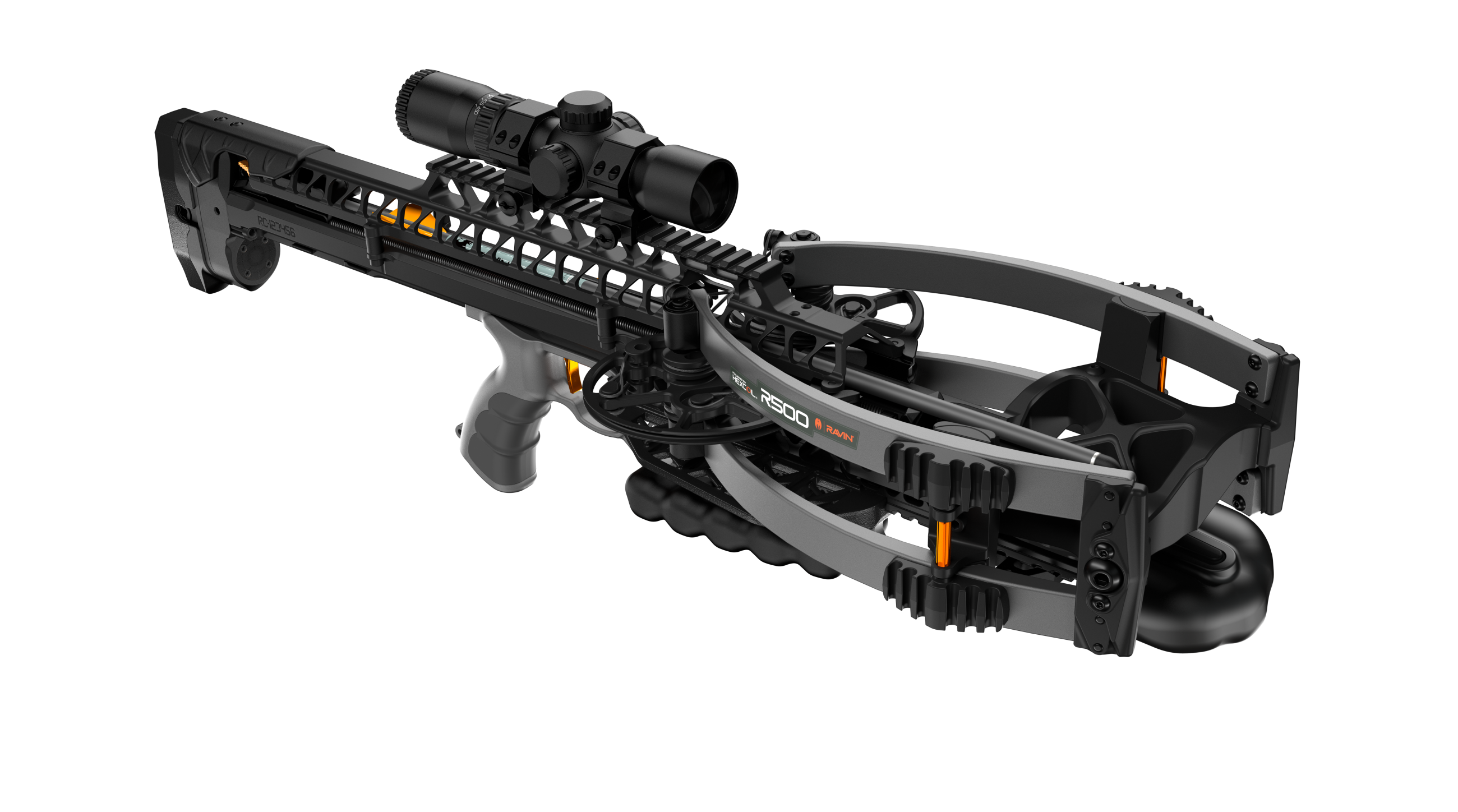
Get the Ravin R500 on Amazon →
500 FPS flattens the long shot
The R500 launches a 400-grain arrow at a blistering 500 feet per second with 222 ft-lbs of kinetic energy (manufacturer figures, Ravin Crossbows). That speed is not a spec-sheet brag — it's forgiveness. A flat-shooting arrow means a misjudged yardage that would sail over or under a deer's vitals with a slower bow still finds the mark, and the raw energy drives a clean pass-through at ranges most hunters only dream about. For the whitetail hunter who has to take a 60-yard shot in the last minute of legal light, that margin is the difference between a recovered animal and a lost one.
The trajectory difference is real in the field. A 350 FPS bow drops roughly 12–14 inches from 40 yards to 60 yards. The R500 drops less than half of that. Miss the range by 5 yards on a slow bow and you punch a lung shot into a spine; miss by 5 yards on the R500 and you're still in the boiler room.
Compact, quiet, and built to outlast you
For all that power, the R500 stays remarkably short and packable thanks to Ravin's HexCoil cam system, which rotates the cams a full 360 degrees to store more energy in a shorter stroke. Uncocked, it's 7.6 inches axle-to-axle. Cocked, it collapses to 3.6 inches — narrower than most compound bows and the reason it actually maneuvers inside a treestand or a ground blind without banging a limb into a rail.
It cocks with Ravin's VersaDrive Cocking System — an internal screw drive that moves the Trac Trigger Firing System back and forth. That means no rope cocker, no crank arm dangling off the buttstock, and no clatter to bust a buck at 30 yards. The whole package weighs 8.4 pounds ready to shoot and measures 28 inches from stem to stern. Aluminum riser, CNC-machined components — it's a precision instrument built to be handed down to your kid.
Ravin R500 — the specs that matter
| Spec | Number | Why it matters in the field |
|---|---|---|
| Speed (400 gr. arrow) | 500 FPS | Flattest trajectory in the lineup — forgives yardage misreads |
| Kinetic energy | 222 ft-lbs | Clean pass-throughs at extended range |
| Overall length | 28 in | Fits in a treestand or blind without wrestling |
| Width uncocked | 7.6 in | Compact for transport in a case or truck |
| Width cocked | 3.6 in | Narrower than most compound bows — real maneuverability |
| Power stroke | 15 in | Long stroke = more stored energy in a short package |
| Draw weight | 300 lbs | The engine behind 500 FPS |
| Draw effort | 17 lbs | What YOU feel cocking it — easier than a 60-lb compound |
| Weight bare | 8.4 lbs | Heavier than an R29X but shootable off-hand |
| Cocking | VersaDrive internal drive | Silent, no rope, no crank clatter |
| Cam system | HexCoil (360° rotation) | How Ravin gets 500 FPS in a 28-inch chassis |
All specifications published by Ravin Crossbows. Kinetic-energy figure is manufacturer-tested with 400-grain arrows; real-world results vary with arrow weight and broadhead choice.
Who the Ravin R500 is for
The R500 is built for a specific hunter. If any of these describe you, the price makes sense:
The long-range whitetail hunter who scouts hard, sits Nov mornings until noon, and wants zero equipment excuses when a 60-plus-yard shot presents itself. The flat trajectory is your insurance policy.
The Western elk or mule deer hunter using a crossbow tag in states that allow it. Elk-sized vitals + open country + variable range readings = you need the R500's forgiveness margin.
The treestand hunter in tight cover who's given up on wider crossbows banging into stand rails. The 3.6-inch cocked width actually solves the "can I swing on that deer" problem.
The buy-once-cry-once buyer who's already been through two mid-tier crossbows and is done buying disposable gear. Ravin's construction and the CNC parts inventory mean this is a crossbow you service, not replace.
The hunter with a shoulder injury or aging strength who can't crank a heavy compound but can absolutely turn a VersaDrive handle. 17-lb draw effort is dramatically easier than a 60–70 lb vertical bow.
Who the R500 is NOT for (the honest section)
This is where most reviews go quiet. The R500 is a great crossbow, but it's the wrong crossbow for a lot of buyers. If any of these apply, spend your money differently:
The once-a-year sit-on-a-food-plot hunter. If you shoot one or two arrows a season at deer inside 30 yards, you don't need 500 FPS. A $500 Barnett does that job. The R500 is $3,000-plus of capability you'll never touch.
First-time crossbow buyers. The R500 has more moving mechanical parts than any competitor. That's fine when you understand how a crossbow works. If this is your first bow, buy a simpler model, learn the platform, then upgrade.
Hunters who don't have a scope-level range routine. The R500's speed doesn't help you if you're guessing distance. If you're not committed to owning a real rangefinder and dialing turrets or using the range-compensating reticle correctly, you're paying for capability you can't access.
Anyone who can't service or ship for service. Ravin crossbows do require occasional cable/string service. The parts and process are handled through Ravin's authorized dealer network. If you're in a remote area with no dealer and don't want to ship the crossbow, a simpler platform is smarter.
The bargain hunter. If the price makes you flinch, don't buy it. There is no shame in a $700 crossbow. There IS shame in a $3,000 crossbow you resent every time you look at the credit card statement.
How the R500 stacks up against three real alternatives
The R500 doesn't exist in a vacuum. Three crossbows compete for the same top-shelf money, and each wins a different fight.
| Crossbow | Speed | Weight | Cocked width | Why buy it instead |
|---|---|---|---|---|
| Ravin R500 | 500 FPS | 8.4 lbs | 3.6 in | The 500 FPS benchmark — flattest trajectory, quietest cocking |
| TenPoint Nitro 505 XERO | 505 FPS | 7.9 lbs | ~7.5 in | The one crossbow that out-speeds the R500 — and ships with a Garmin XERO rangefinding scope built in |
| Ravin R29X Sniper | 450 FPS | 6.75 lbs | ~6 in | The Ravin platform at ~half the price and 1.65 lbs lighter — the honest "I don't need 500 FPS" answer |
| Barnett Hyper Raptor GTX | 425 FPS | 7.6 lbs | 7.5 in | Real hunting speed at roughly a third of the R500's price — the buyer-doesn't-need-500-FPS pick |
Honest read: The Nitro 505 XERO is the only crossbow that competes with the R500 head-to-head on speed, and it comes with the Garmin rangefinding scope that solves the "know your distance" problem in a way the R500 doesn't. If you can stretch to the XERO package, it's arguably the smarter buy for the hunter who wants speed AND yardage automation. The R29X gets you inside the Ravin ecosystem for less money, which is the honest answer for most hunters. The Barnett is the "I don't need to spend luxury-crossbow money to fill a tag" pick.
Pro tips before you pull the trigger
These are the things nobody warns you about until after the credit card charge clears.
Buy the .001 straightness arrows — not the .003. A 500 FPS crossbow will telegraph any arrow inconsistency into a bad group at 60 yards. Ravin's .001 R500-specific arrows are the ones the crossbow was tuned around. Cheaper arrows shoot fine at 30 yards and unpredictably at 60. Do not shortcut the arrows.
Match the broadhead to the platform. Not every mechanical broadhead handles 500 FPS impact velocity. Look for broadheads rated for high-speed crossbows — Rage Hypodermic Crossbow, Swhacker Levi-Trek, and G5 Deadmeat all publish speed ratings. A 400-grain fixed-blade will fly true; some mechanicals rated only to 400 FPS will deploy in flight and tumble.
Range your shot ONE more time than you think. The R500's flat trajectory tempts you to skip the rangefinder because "it doesn't matter that much." At 60+ yards, it still matters. A 5-yard error on a deer at 65 yards is still a marginal shot. Range twice, dial once.
Discharge into a proper crossbow target — never dry-fire. Dry-firing any 300-lb-draw crossbow will destroy the cams. If you need to un-cock, use a discharge arrow into a Rinehart or Block crossbow target. Ravin sells a de-cocking arrow specifically for the R500 platform.
Service the cables at manufacturer intervals. Ravin recommends cable/string replacement roughly every 200 shots or annually, whichever comes first, for the R500's high-draw system. Skip this and you're gambling with a cable strand snap during a hunt. Bake the service cost into your ownership math.
Use the included scope struts. The R500 ships with scope struts that stiffen the scope-to-rail interface. They're not decorative. Under 500 FPS launch shock, an un-strutted scope will drift zero within 20–30 shots.
Field scenarios: three hunts, three different answers
Specs on a page are one thing. How a top-shelf crossbow works — or fails to work — inside the moment of truth is another. These three example scenarios put the R500 in the situations most buyers actually face and describe how the crossbow's design choices play out when the sun is dropping and the deer has finally stepped clear.
Scenario one: the late-November stand hunt, 62 yards, seven minutes of light
Cold front the night before, wind out of the northwest, mature buck cruises the edge of a picked cornfield and hangs up at a scrape line 62 yards from the stand. He is broadside. He is not coming closer. On a 350 FPS crossbow, that shot is a decision tree: hold high, guess the wind, hope the arrow gets there before he steps. On the R500, the ranged distance drops the reticle onto the shoulder crease, the arrow arrives in roughly 130 milliseconds of flight time, and the wind window shrinks proportionally. The compact cocked width means the buttstock swings inside the stand rail instead of bumping it. The internal cocking mechanism was silent hours earlier when the crossbow was drawn cold. The clean pass-through drops him inside 40 yards of the impact site. Every design decision the R500 makes — speed, compactness, quiet cocking — earns its keep in this exact scenario.
Scenario one, alternate ending: same setup, wrong arrow
Same buck, same yardage, but the shooter economized on arrows and ran a bulk-pack .006-straightness shaft instead of the manufacturer-matched .001. At 30 yards on the sight-in bag, the group looked fine. At 62 yards on a real deer, the inconsistent spine loads and shaft runout stack up into a four-inch flyer — and a four-inch flyer on a broadside deer is a liver shot instead of a lung shot. The R500 did nothing wrong. The arrows did. This is the failure mode nobody warns about: a precision platform amplifies every downstream shortcut. The crossbow tunes around specific ammunition, and shooting anything else is throwing away the capability you paid for.
Scenario two: Western mule deer, open sage, variable range
Colorado high desert, a bedded muley at what the rangefinder reads as 74 yards, thermals rolling and the shooter's heart rate above 130. The R500's flat trajectory means the difference between a 70-yard and 75-yard hold is roughly 1.5 inches of drop — well inside the vital zone even on a wrong-yardage read. The 8.4-pound weight is heavier than a compound bow but shoots dead-steady off a bipod or a shooting stick, which is how open-country crossbow hunters actually take these shots. The forgiveness margin here is not about being lazy; it is about being human under pressure. The R500 lets you make a good decision when your hands are shaking.
Scenario three: hog eradication at 20 yards under a feeder
This is the scenario where the R500 is the wrong tool. A 500 FPS crossbow does not do anything on a 20-yard hog that a 400 FPS crossbow does not do just as well — and the noise signature of the shot inside a tin feeder pen is loud enough to scatter the sounder before a follow-up. For close-range, high-volume situations, a lighter and cheaper platform is the smarter tool. The R500 is a precision instrument for a specific set of shots. Using it as a general-purpose brush gun leaves capability on the table and puts unnecessary wear on a system built for a different job.
Care, service, and the 10-year ownership plan
A $3,000-plus crossbow is a decade purchase, not a season purchase. Treat it like one. The R500 rewards a disciplined maintenance routine and punishes owners who skip service intervals. Here is the realistic ownership picture.
The two-year consumables kit
Certain parts are wear items on any crossbow at this draw weight, and the R500 is no exception. Cables and strings are the biggest one — Ravin publishes a service interval of roughly 200 shots or 12 months, whichever comes first, and that guidance is not aspirational. A cable strand that lets go under 300 pounds of draw weight is a broken bow and a potentially injured shooter. Budget for replacement cables and a serving refresh once a year for active hunters, or every two seasons for the once-a-year sit hunter. The rail lube tube, the flight-track wax, and a fresh set of .001 manufacturer-matched arrows round out the two-year kit. None of this is optional.
The 10-year hand-down kit
The parts that make the R500 a generational tool are the aluminum riser, the CNC-machined trigger group, the HexCoil cam bodies, and the VersaDrive cocking hardware. Those parts do not wear out on any realistic schedule — they wear predictably, and the wear is serviceable through Ravin's authorized dealer network. Store the crossbow uncocked in a hard case, in a climate-controlled space, with the strings de-tensioned per the manual and a light rail wipe once a month during the off-season. Do not lean it against a wall. Do not store it in a hot attic. Do not leave it in a truck cab through a summer. The aluminum tolerates all of that, but the polymers in the cable serving do not.
Warranty, service, and the "who fixes this" question
Ravin's warranty is a lifetime limited warranty to the original owner covering manufacturing defects, with the actual service work performed through the authorized dealer network. That distinction matters. If a cam bearing fails at year six, the crossbow goes back to a Ravin-authorized service center — not the local archery shop with a bow press and a hope. Buyers in remote areas should confirm dealer proximity before purchase, or plan on shipping. The alternative — a home fix with a shop press — will destroy the crossbow and void the warranty in the same afternoon. Send it in. Ravin turns most service around inside two to three weeks, faster if the ticket is submitted before the peak-season crush.
Replacement parts you should own before you need them
A spare set of factory-spec arrows, a spare nock package, a rail-lube tube, a bow-string wax stick, and a discharge arrow. That is the pre-season kit. Anything more elaborate is over-preparation for a mechanical bow. Anything less is under-preparation, and the shortage always shows up on the wrong morning.
Frequently asked questions
Is the Ravin R500 worth the price?
Only if you actually shoot at ranges beyond 40 yards, or you hunt in country where 60–80 yard shots are realistic, or you value the compact 3.6-inch cocked width for treestand mobility. If you're a food-plot hunter taking 25-yard shots, no. If you're an elk hunter, a Western mule deer hunter, or a stand hunter in tight cover, the price is defensible. Nobody needs an R500 — but a specific hunter can absolutely justify one.
How does the R500 compare to the TenPoint Nitro 505?
The Nitro 505 is 5 FPS faster on paper (a rounding error in the field) and lighter by half a pound, but wider at ~7.5 inches cocked vs the R500's 3.6 inches. The Nitro 505 XERO package includes a Garmin XERO auto-ranging scope, which meaningfully changes the "how far is it?" equation. The R500 wins on compact width and cocking quietness; the Nitro 505 XERO wins on the integrated rangefinder. Both are top-tier — pick the one whose tradeoff you value more.
Can beginners use the Ravin R500?
Physically, yes — the 17-lb draw effort is easy, and the trigger is glass-smooth. Practically, no. The R500 has more moving mechanical parts than any competitor, requires disciplined broadhead and arrow choice, and rewards a hunter who already knows what a well-tuned crossbow feels like. Beginners should start on a simpler platform (Barnett Hyper Raptor, Ravin R29X) and upgrade when they've earned the R500's capabilities.
What arrows does the Ravin R500 shoot?
The R500 is optimized for Ravin's own .001-straightness 400-grain arrows in the R500 series. Other 400-grain arrows will fly, but the R500 is a tight-tolerance system that will show any inconsistency downrange. Ravin publishes the .001 R500 arrows specifically as the tuning benchmark. Save yourself the headache and shoot what the manufacturer built the bow around.
Do I need a special target?
Yes. Foam bag targets designed for 300–400 FPS vertical bows will not survive 500 FPS crossbow arrows — the arrows will pass through, embed in the ground behind, and destroy the fletching on retrieval. You need a dedicated high-speed crossbow target rated to at least 500 FPS. Rinehart, Block, and Morrell all sell crossbow-specific targets that hold up to the R500 platform.
How loud is the R500 when it shoots?
Louder than a compound bow, quieter than most 400-plus FPS crossbows in its class. The two big noise sources on any crossbow are the string snap at release and the limb resonance after release. The HexCoil cam system stores energy in a shorter stroke and cycles smoother, and Ravin's factory string dampeners knock down a meaningful chunk of the post-shot ring. Add a set of limb-tip suppressors for another noticeable drop. It will never be silent — nothing at 500 FPS is — but the audible signature is closer to a heavy compound release than the sharp bang of a bargain crossbow.
What is the realistic effective hunting range of the R500?
Ethically, the honest answer is "as far as you have practiced and can guarantee vitals in the field conditions you are actually hunting in." Mechanically, the R500 stays inside a vital-zone group at 80 yards for a competent shooter off a rest. Field ethics tighten that number: a stand hunter with a windless morning and a broadside standing deer can honestly consider a 70 to 80 yard shot; a Western hunter in open country with variable wind should tighten the personal cutoff to 60 to 65 yards even though the bow is capable of more. Range is what your worst day allows, not what your best day allowed at the sight-in bag.
Is the Ravin R500 legal for hunting in every state?
Crossbow regulations are state-specific and change year over year. Most states now permit crossbows during at least part of the archery season, and many permit them season-wide. A handful of states restrict crossbow use to disabled hunters during archery-only weeks or require specific season tags. Always check the current-year regulations in the state and unit you are hunting. The R500 itself carries no unusual legal footprint at the federal level — it is a compact vertical-cam crossbow that meets standard sporting-goods classification — but state hunting rules are the binding layer.
Can you hunt elk with the R500?
Yes, in states that allow crossbows for elk. The 222 ft-lbs of manufacturer-published kinetic energy is well above the commonly cited 65 ft-lb minimum for elk-sized game, with margin left over for a suboptimal broadhead angle or a heavy shoulder-bone quartering shot. The R500's flat trajectory is arguably better matched to open-country elk than to tight-timber whitetail, since Western hunters are the ones most likely to face variable-range shots on large-vital animals. Broadhead selection still matters — use a fixed-blade or a heavy-bone-rated mechanical, not a light deer-only mechanical.
What comes in the R500 factory package?
Ravin's R500 package typically ships with the crossbow, an illuminated variable-power scope, a set of factory-matched .001 straightness arrows with field points, a quiver, and the cocking handle for the VersaDrive system. Ravin has offered several package configurations over the R500's production life — the Sniper, the Slate, and refreshed color variants — and the included scope tier varies by SKU. Check the specific listing before buying if the scope model matters to your build. A discharge arrow and a target are not typically included and are the first two accessories to add.
Do you need a rangefinder with the R500?
Yes. The flat trajectory shrinks the penalty for a yardage misread, but it does not eliminate it — and every serious crossbow hunt at extended range starts with a real ranged number. A dedicated laser rangefinder in the sub-1,000-yard hunting category is the minimum; a rangefinding scope on the crossbow itself is the more elegant answer for hunters who prefer one instrument to manage. The R500 does not ship with a rangefinding scope out of the box, which is one of the arguments for the competing TenPoint Nitro 505 XERO package for buyers who want that capability integrated.
How does the R500 handle cold-weather hunts?
The aluminum riser and CNC-machined trigger group are indifferent to cold. The polymer components in the cable serving and limb dampeners stiffen slightly at deep sub-freezing temperatures, but the bow shoots on-zero in real winter conditions with no measurable point-of-impact shift for hunters who have documented cold-weather zero. The bigger cold-weather variable is the shooter: gloves change trigger feel, and stiff hands change cocking-handle mechanics. Practice with the actual gloves you will hunt in. The R500 is a machine that does what it did in September when November arrives; the human is the variable.
The bottom line
The Ravin R500 is the top of the mountain. Fastest arrow in a mainstream production crossbow. Most compact cocked width in its speed class. Quietest cocking system in the segment. Precision aluminum-and-CNC construction that will still be hammering bullseyes a decade after you buy it. It is not the crossbow for every hunter — and this review has been clear about who should walk away and buy something simpler. But for the hunter who actually shoots at extended range, actually hunts in tight cover, and actually wants to be done buying crossbows for the next ten years: the R500 earns its price tag.
If the R500 is too much bow, the Ravin R29X Sniper is the honest step down inside the same platform. If you want auto-ranging built in, the TenPoint Nitro 505 XERO is the direct competitor. And if 500 FPS is a luxury you don't need, the Barnett Hyper Raptor GTX is real hunting capability at a fraction of the money.
Advertisement
FTC Disclosure: OSS America contains affiliate links. We earn a commission from qualifying purchases at no extra cost to you. Every pick is research-based: specs, verified prices and owner reviews.
More reviews
 Top PickHunting
Best Hunting Knives (2026): Fixed, Folding & Replaceable Blade
Benchmade Steep Country, Buck 110, Buck PakLite, Outdoor Edge RazorPro and more: eight hunting knives compared on steel, blade length, weight and real October 2026 prices, with honest pros and cons.
 Top PickHunting
Best Rifle and Scope Combos (2026): Hunting Rifles That Come Scoped
Savage, Mossberg, Winchester and Ruger: we compare seven factory-scoped hunting rifles on the scope in the box, trigger, fit and real October 2026 prices, with honest notes on when to upgrade the glass.
 Top PickHunting
Best Muzzleloaders (2026): 6 Picks for Muzzleloader Season
Traditions NitroFire, NitroFire Pro and NitroBolt, CVA Optima V2 and two T/C Encore rifles compared on ignition, barrel, fit and real October 2026 prices, with honest pros and cons.
 Top PickHunting
Best Heated Socks (2026): 7 Battery and Rechargeable Picks for Hunting and Cold Days
We compare seven ActionHeat heated socks on heat, run time, battery type, fabric and real October 2026 prices, from $25 AA socks to 150-degree 5V wool socks, with honest pros and cons.
 Top PickHunting
Best Predator Calls (2026): 8 Electronic and Hand Calls, Ranked
FOXPRO, ICOtec, Lucky Duck and Western Rivers: we compare eight predator calls on sounds, remote range, decoys, power and real October 2026 prices, with honest pros and cons.
 Top PickHunting
Best Hunting Gloves (2026): 8 Picks for Bow, Cold, Ducks and Wet Weather
King's Camo, Sitka, Glacier Glove and ActionHeat: we compare eight hunting gloves for bowhunting, cold stand sits, duck hunting, wet weather, wool and heat, with real October 2026 prices and honest pros and cons.