Tact Bivvy 2.0 Review: The Survival Sleeping Bag That Fits in Your Pocket
Advertisement
Hypothermia doesn't wait for winter. A twisted ankle on an afternoon hike, a wrong turn off the marked trail, a squall that rolls in an hour before you thought it would — and suddenly you're spending a 40-degree night outside with no shelter. The people who walk out of those nights the next morning aren't tougher, luckier, or more skilled. They're the ones who had a way to trap their own body heat when it mattered.
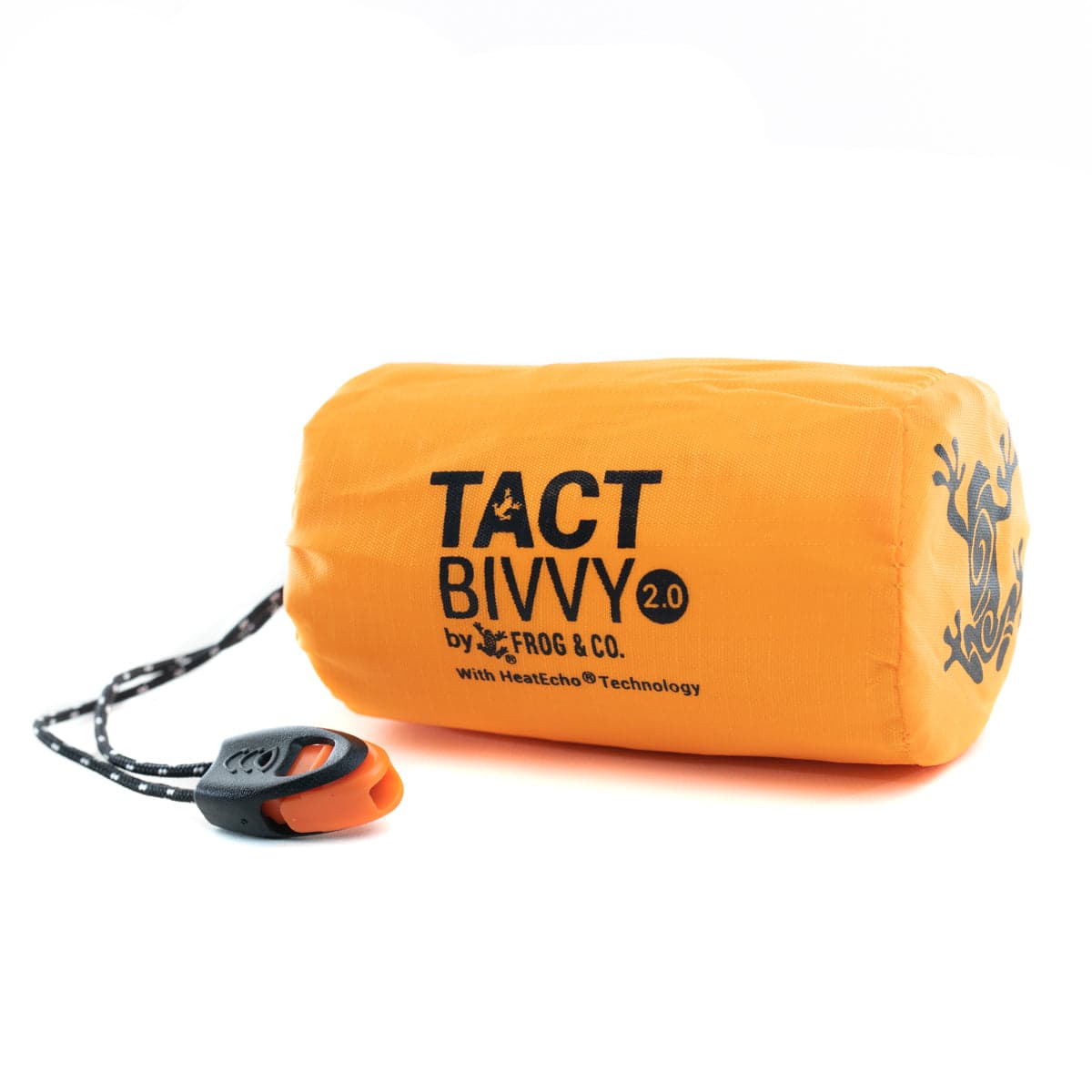
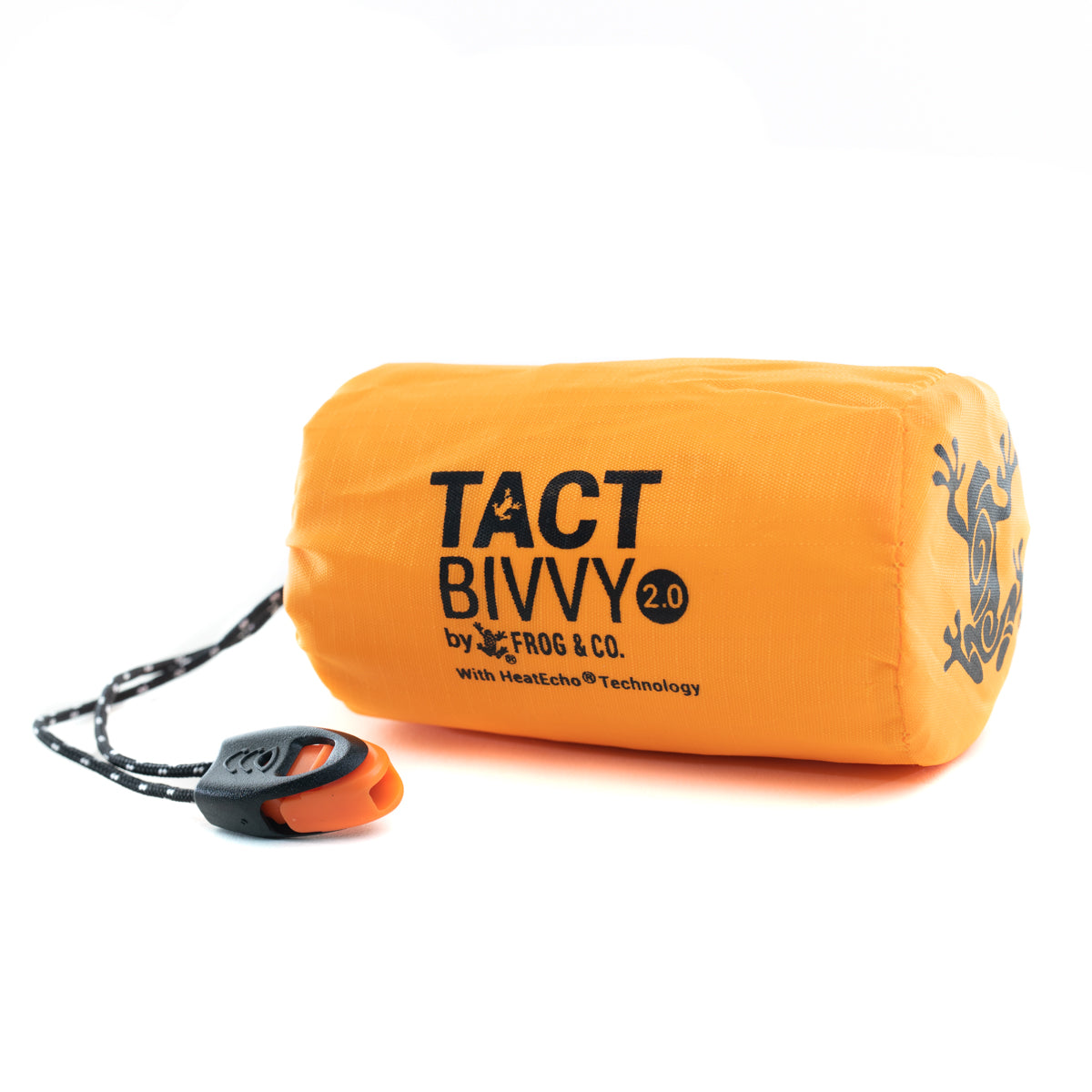
The Tact Bivvy 2.0 by Survival Frog is that way. It's a reusable emergency sleeping bag that packs down to roughly the size of a soda can, weighs about as much as a candy bar, and lives in your pack, glovebox, hunting kit, or bug-out bag without you ever noticing it's there. That last part — the "you actually carry it" part — is why it works. Gear that stays home saves no one.
This is our long-form, research-based review of the Tact Bivvy 2.0, built around the way an average person actually uses one: stuffed at the bottom of a daypack, forgotten for months at a time, then pulled out on a cold night when it has to do what the label claims.
Check today's price on the Tact Bivvy 2.0 →
Real Specs (from Survival Frog)
We pulled these numbers directly from the manufacturer's product page, not from Amazon guessers or resale listings. If you want to sanity-check any of them, they're all listed on Survival Frog's own spec sheet:
- Interior size: 36 in wide × 84 in long (fits users up to about 6'4")
- Packed size: ~4.75 in tall × 3 in wide (soda-can class)
- Weight: 4.1 oz including stuff sack
- Material: HeatEcho mylar-based reflective film, tear-resistant
- Heat retention: reflects up to 90% of radiated body heat (manufacturer claim)
- Waterproof: yes
- Windproof: yes
- Reusable: yes — not a one-shot foil bag
- Color: high-visibility orange (also functions as a signal panel)
- Included: bivvy + drawstring stuff sack
Two numbers matter more than the rest. The 4.1 ounces is what makes people actually carry it — nobody notices four ounces at the bottom of a pack. And the 90% radiated-heat reflection is what turns a survivable-but-miserable night into a survivable one. Radiated heat is the biggest way an inactive body loses warmth after sundown; a mylar-lined bivvy bounces most of it back before it escapes into the air.
What It Actually Does
Emergency bivvies get sold on the promise of "warmth," but the honest description is more specific: the Tact Bivvy 2.0 is a portable heat-loss brake. It doesn't generate warmth. It slows the four ways your body sheds it — radiation, convection, conduction, and evaporation — long enough for you to survive a night you weren't planning to spend outside.
The HeatEcho film handles radiation (that's the 90% number) and blocks wind convection because it's a sealed envelope. The waterproof outer surface stops evaporative cooling from rain, dew, or wet clothes. Conduction — heat sucked out through the cold ground — is the one thing the bivvy alone can't solve; for that you still want a jacket, a pile of pine needles, or a foam pad between you and the dirt. Every honest bivvy review skips that detail. We're not going to.
Used correctly (fully zipped up, head inside, something underneath you), the Tact Bivvy 2.0 turns a 40-degree wet night from potentially fatal into cold and uncomfortable but survivable. That is the entire product. Anyone selling it as a "sleeping bag" for backpacking is misrepresenting the category.
Who It's For
The Tact Bivvy 2.0 is built for the person who wants a real hedge against the one outdoor emergency most likely to actually kill them, without adding meaningful weight to what they already carry. Specifically:
- Day hikers and trail runners who go out for 3–6 hours in country where a twisted ankle means an unplanned overnight.
- Hunters who sit in stands or spot-and-stalk in cold country and need a bailout if a stalk goes long or a truck won't start.
- Anyone with a glovebox kit for winter driving through mountain passes, remote highways, or long empty stretches where a breakdown becomes an overnight.
- Bug-out and go-bag builders who need a shelter component that doesn't eat 3 pounds and half the pack.
- Parents stashing one in each kid's daypack for family hikes — the whole household is covered for the cost of a couple of pizza nights.
Who It's NOT For
This is where most reviews lie. We're not going to. The Tact Bivvy 2.0 is the wrong product if any of the following is you:
- You want a real sleeping bag. This is not a replacement for a down or synthetic mummy bag on planned overnights. It doesn't loft, it doesn't breathe well, and condensation will build up inside if you use it three nights in a row.
- You want a comfort item. Mylar-based film crinkles. It sounds like a chip bag every time you shift. That is the correct tradeoff for something that packs to soda-can size, but if the noise bothers you, you'll hate it.
- You need multi-night expedition shelter. The Tact Bivvy is a one-emergency-night tool. It's reusable across many emergencies, but not designed to be your primary shelter for a week in the backcountry.
- You expect it to warm you up when you're already deep in hypothermia. This is a heat-loss brake, not a heater. If someone is already severely hypothermic, they need active rewarming (skin-to-skin, warm fluids, medical help) — the bivvy is a preventative and a stabilizer, not a rescue device.
- You want to sleep on the ground with no pad. Bring a jacket, a pile of leaves, or a cheap foam pad. Otherwise the ground steals what the bivvy just saved.
Buy it for what it is — a 4-ounce insurance policy against an unexpected cold night — and it's one of the best values in outdoor gear. Buy it expecting a real sleeping bag and you'll be disappointed and possibly unsafe.
Scenarios It's Built For: Three Nights Where It Earns Its Keep
Spec sheets are one thing. The situations it was built for are another. Here are three common ways an unplanned night happens, and what the Tact Bivvy 2.0 is designed to do in each. These are illustrative scenarios, not our own test results.
Scenario one — late-October ridge hike, mid-40s at dusk, 33°F by 3 a.m. A day hike runs two hours long because a wrong turn adds a mile. Sunset catches the party above treeline with a rolled ankle in the group. Instead of pushing down bad terrain in the dark, they stop, drop packs, and pull the bivvies out of the bottom of their daypacks. Layered under rain shells, over base layers, sitting on top of empty packs with jackets stuffed underneath for ground insulation, the bivvy is what slows the heat loss enough to wait for daylight. Not comfortable, not close to comfortable, but a completely different night than the same one without a bivvy.
Scenario two — elk hunt, spot-and-stalk gone long. A hunter follows a bull farther than planned, takes the shot late, and finishes field-dressing after dark with a headlamp while the temperature drops fast at elevation. Rather than trying to pack the animal out over unfamiliar scree in the dark, the smarter play is to pull the bivvy out of the hunting pack, sit on the empty pack for ground insulation, and wait for daylight next to the cached meat. It will be cold, loud and long — the crinkle noise is real. The alternative outcome — a broken leg in a boulder field at 2 a.m. — is not one to trade against a little noise.
Scenario three — winter breakdown on a mountain pass. A solo driver breaks down on a remote pass in January, cell service dead, roadside kit in the trunk. A bivvy from the glovebox, pulled over a wool blanket and a puffy, can turn a run-the-heater-until-empty scenario into a heater-off, engine-off, no-carbon-monoxide-risk wait for help.
Across all three, the same three things matter: something between the body and the ground, a full body-and-head seal, and a small vent for breath. Skip any one of those and the results get worse fast.
How It Compares to Other Emergency Bivvies on Amazon
The Tact Bivvy 2.0 is a Survival Frog product, so the direct-to-brand link above is the honest place to buy it. But if you're comparison-shopping the category, these are the three Amazon alternatives most people cross-shop against — and how they stack up.
| Product | Packed Weight | Reusable? | Best For |
|---|---|---|---|
| Tact Bivvy 2.0 (Survival Frog) | 4.1 oz | Yes | Pocket-carry, everyday-carry emergency use |
| S.O.L. Emergency Bivvy (ASIN B0038MEC5Y) | 3.8 oz | Limited | Ultralight kits where every ounce is measured |
| Don't Die In The Woods Survival Bivvy (ASIN B0777PC2L4) | 4.7 oz | Yes | Slightly beefier feel; higher tear resistance |
| Go Time Gear Life Bivy (ASIN B01N9U84WQ) | 4.1 oz | Yes | Budget pick; often the cheapest of the four |
Honest read: all four products live in the same 4-ounce mylar-envelope category and all four will save the same life on the same 40-degree night. The Tact Bivvy 2.0's advantage is the reusable HeatEcho film + Survival Frog's warranty and returns; the SOL is the ultralight-community default; the Don't Die in the Woods bag has a marginally tougher feel; the Go Time Gear is usually the price leader.
Pro Tips: Getting the Most Out of a 4-Ounce Bivvy
A lot of the negative reviews on any emergency bivvy come from people using it wrong. Do these five things and it works the way it's supposed to:
- Put something between you and the ground. This is the single biggest mistake. Conduction through cold dirt will strip heat faster than the bivvy can save it. Sit on a jacket, a pack, a bed of pine needles, or a $10 foam sit-pad. Anything is better than nothing.
- Change out of wet clothes if you can. Water conducts heat 25× faster than air. Even a partial change — dry socks, dry base layer — buys you hours.
- Get the whole body in, including your head. Uncovered heads leak enormous amounts of heat. Zip up, leave just a nose-breathing gap, and cinch the opening.
- Don't seal it airtight overnight. A tiny vent for exhaled moisture prevents the interior from turning into a wet, cold, condensation-soaked chamber by 4 a.m.
- Repack it dry. After using it, dry it fully before restuffing the sack. Damp mylar in storage develops small tears and loses reflectivity over months.
None of that requires practice or gear. But the difference between a bivvy user who followed those five steps and one who didn't is often the difference between "cold but fine" and "walked out with frostbite."
Care and Maintenance: Making a $30 Bivvy Last a Decade
The HeatEcho film in the Tact Bivvy 2.0 is durable for what it is, but it's still a thin reflective laminate. Treat it like a rain jacket, not a wool blanket, and it will keep working for many years. Treat it like a tarp and it will fail on the night you need it. Here's the maintenance routine that keeps one working.
After every use, dry it fully before repacking. Turn it inside out, hang it in shade for an hour or two, wipe down any obvious dirt with a damp cloth, and let both sides air out. Damp mylar in a stuff sack develops pinhole tears where the film adheres to itself over months of storage — the exact opposite of what you want the next time the bivvy comes out.
Store it uncompressed when possible. The 4.75-inch packed size is what makes it carry-able in the field, but for long-term glovebox or gear-room storage, a loosely folded bivvy in a gallon zip bag holds up better than one crammed at maximum compression for two years straight. Every twelve months, pull it out, unfold it, hold it up to a light source, and scan for pinholes. Small ones can be patched with a strip of clear repair tape (Tenacious Tape or the equivalent) on both sides of the film.
Rotate it out of hot vehicles. A glovebox in a Southern summer routinely hits 140°F+. The bivvy will survive that, but the drawstring stuff sack degrades faster in constant heat than the bivvy itself. Every spring, check the sack cord and swap the whole unit if the fabric feels crispy.
Know the warranty. Survival Frog offers a lifetime replacement guarantee on the Tact Bivvy 2.0 for manufacturing defects. That does not cover a bivvy you tore on a stick during an actual emergency — but it does cover a seam that fails on inspection, a zipper-style opening that binds out of the box, or reflective coating that flakes without abuse. Save the order confirmation email in a folder with your other gear receipts; that's the fastest path to a warranty claim.
Replace, don't repair, after a real emergency use. Once a bivvy has actually earned its keep — a cold overnight, a car breakdown, a rescue — treat it as consumed. Retire it to a “training and demo” role and buy a fresh one for the pack. The margin between a bivvy that works and one that fails is thin, and the price of another unit is the cheapest insurance you'll ever buy.
FAQ
Is the Tact Bivvy 2.0 a sleeping bag or a bivvy?
It's a bivvy — an emergency shelter designed for one unplanned overnight. It shares the shape of a sleeping bag, but the insulation model is reflective (not lofted), so it's not the right product for planned camping trips where you want to be comfortable and sleep well.
What temperature is it rated for?
Survival Frog does not publish a formal temperature rating, and that's actually the right call — a bivvy's effective temperature depends entirely on what you wear inside it and what you sit or lie on. Realistic field expectation: comfortable at 50°F with base layers, survivable but cold at 30°F with insulation and a ground barrier, at-your-limit around 20°F even with everything done right.
Can I reuse it, or is it a one-shot product?
Reusable. That's the main upgrade over the classic $2 foil space blanket. HeatEcho film holds up to dozens of pack-and-repack cycles as long as you dry it after use and don't stuff it wet.
Will it work as a rain shelter?
Short-term, yes — the outer surface is waterproof. But it's a sealed envelope, so extended use in the rain traps condensation inside. For actual rain shelter over multiple hours, pair it with a small tarp or a poncho used as a tarp.
How many should I own?
Most families end up with three to five. One in each daypack, one in each vehicle, and one in the household bug-out or 72-hour kit. At this weight and price, redundancy costs almost nothing and covers every scenario at once.
Does the Tact Bivvy 2.0 work in summer heat, or is it winter-only?
It works year-round, but the use case shifts. In summer, the risk is a wet, 55°F thunderstorm night at elevation — still very much a hypothermia scenario. The bivvy handles that identically to a winter night: seal the envelope, insulate underneath, vent for breath. Nobody dies of heat by having one in the pack; they die of cold by not.
How loud is the mylar crinkle, really?
Louder than a nylon bag, quieter than a chip bag being crushed. Any movement produces sound. In genuine emergency use nobody cares. On a planned overnight where you want to sleep well, it will absolutely wake you up when you shift — another reason this is not a replacement for a real sleeping bag.
Can two people share one bivvy?
Not comfortably, and not without stretching the seams. The 36-inch interior width fits one adult with layers on. For two-person coverage, carry two bivvies — at 4.1 ounces each, the weight and cost of redundancy is almost nothing.
Is it safe for kids?
Yes, with two caveats. First, never seal a small child inside without an air gap for breathing — the same rule that applies to any enclosed sleeping surface. Second, walk kids through opening the bivvy themselves before they ever need to; the drawstring sack and the entry are simple, but simple under stress is not the same as simple at the kitchen table.
Will body sweat ruin the bivvy overnight?
No, but it will make the interior clammy by morning. That's the venting rule: leave a small opening at the head for exhaled moisture. A bivvy sealed airtight for eight hours will condense enough water inside to make the user colder than they started. A bivvy with a fist-sized breathing gap stays functional through the night.
Can it double as a signal panel for search and rescue?
Yes — the high-visibility orange exterior is designed for exactly that. Laid flat on the ground or draped over a bush in an opening, it's visible from an aircraft at a distance that a person in earth-tone clothing simply is not. That secondary use is one of the more underrated reasons to carry the reusable orange version instead of a silver foil blanket.
How does it compare to a foil space blanket?
A $2 foil blanket reflects a similar percentage of radiated heat in the moment, but tears after one use, doesn't form an envelope around the body, and offers no wind or rain protection. The Tact Bivvy 2.0 is the same idea evolved into an actual shelter: sealed, reusable, tear-resistant, and body-shaped. For everyday-carry, it's not close.
The Verdict: Buy It, Then Forget It
The Tact Bivvy 2.0 is one of the highest-utility-per-ounce items you can put in a pack. It won't be the most exciting piece of gear you own. Most people who buy it will carry it for years without ever using it in anger — which is the whole point. It exists for the one afternoon when a routine hike turns into an unplanned night, and the difference between "story to tell" and "search and rescue" is whether you had 4 ounces of reflective film in your kit.
Buy one for every pack and every vehicle in the household, throw them in the bottom of each, and don't think about them again until the day one of them earns its keep. At this price point, the math is almost embarrassingly good.
Advertisement
FTC Disclosure: OSS America contains affiliate links. We earn a commission from qualifying purchases at no extra cost to you. Every pick is research-based: specs, verified prices and owner reviews.
More reviews
 Top PickSurvival
Best Survival Knives (2026): 8 Fixed Blades Ranked
Gerber StrongArm, KA-BAR USMC, Buck 119, Buck Selkirk, ESEE Izula, Cold Steel SRK and more: eight fixed-blade survival knives compared on steel, blade length, weight and real October 2026 prices.
 Top PickSurvival
Best Emergency Food Supply (2026): 8 Kits Ranked by Real Cost per Day
We ranked eight emergency food kits from Ready Hour, My Patriot Supply, Emergency Essentials and Survival Fresh by what one 2,000-calorie day really costs, plus protein, shelf life and storage.
 Top PickSurvival
Best First Aid Kits (2026): 8 Picks for Home, Truck, Camp and Dogs
MyMedic MyFAK and Recon, Adventure Medical Kits Mountain Explorer, Sportsman 300, Family and Trail Dog, and more: real October 2026 prices, contents, cost per piece and honest pros and cons.
 Top PickSurvival
Best Emergency Radios (2026): 7 Crank, Solar and Weather Radios Compared
Midland ER310, ER210 and ER310PRO, Kaito KA500, Ready Hour 4-in-1, FosPower A1 and Midland ER10VP: real October 2026 prices, battery size, power options and honest pros and cons.
 Top PickSurvival
Best Bug Out Bags (2026): Premade vs. Build Your Own
Premade go bags, 72-hour kits and bag components from Be Prepared, My Patriot Supply, Camping Survival and Survival Frog, compared on contents, food, weight and real October 2026 prices.
 Survival
Survival Frog Review (2026): Legit or Gimmick Gear? We Checked the Best-Sellers
An honest Survival Frog review: who's behind it, its 8 best-sellers with prices and ratings, which products are legit and which are gimmicks, the 12-month return policy (and its fine print), plus what the BBB and Trustpilot say.