
Best Emergency Water Storage for Home: Barrels, Bathtub Bladders and Stackable Containers

When the water stops, the clock starts. A hurricane knocks out the treatment plant, a freeze bursts a main, or the county issues a boil notice that lasts a week. The grocery store is out of bottled water within hours. Everything else in your emergency plan, from food to cooking to cleaning up, depends on having clean water in the house before that happens.
The good news is that this is the cheapest part of being prepared. We compared seven ways to store water at home, from a $39 bathtub bladder to stackable bricks, a 15-gallon barrel and sealed pouches, using store listings, maker specs, owner reviews and the CDC's own guidance. This is research-based, not a hands-on test. Every price was checked on November 10, 2026.
The short answer
For most homes, start with a few rigid 7-gallon jugs, add a barrel for depth, and keep a bathtub bladder in the drawer for storms. Our picks:
- Best overall: Reliance Jumbo-Tainer 2.0, 7 gallons, about $27. See it at Sportsman's Warehouse →
- Best barrel: 15-Gallon Barrel, about $65, two weeks for one person. See it at Sportsman's Warehouse →
- Best bathtub bladder: WaterBOB, up to 100 gallons, about $39 list. Check price at Amazon →
- Best for apartments: WaterBrick stackable 3.5-gallon bricks, about $55 a 2-pack list. Check price at Amazon →
- Best budget: Reliance 5-Gallon Collapsible, about $11. See it at Sportsman's Warehouse →
Prices checked November 10, 2026, before tax. WaterBOB and WaterBrick show the makers' list prices. Prices change often.
How much water do you actually need?
The CDC says to store at least 1 gallon of water per person, per day, for 3 days, and to "try to store a 2-week supply if possible." It suggests more for pregnant women, people who are sick, pets and hot climates. Ready.gov adds that water needs can double in very hot weather. So a family of four needs 12 gallons for three days and 56 gallons for two weeks, before pets.
That 56 gallons weighs about 467 pounds. Here's how the picks below get you there: eight 7-gallon jugs, four 15-gallon barrels (60 gallons), or a filled bathtub bladder plus a few jugs of water that's always ready.
How we chose
This guide is built from research, not from our own use. We started with what people are searching for. Google interest in "water storage" rose from 54 to 58 over the last 30 days. "Water storage containers" and "emergency water storage" were the top related searches, and the fastest-rising were bathtub bladders (up 1,900%), "water storage containers for home use" (up 500%) and water purification tablets (up 650%).
We covered each type of storage: rigid jugs, a barrel, a bathtub bladder, stackable bricks, a collapsible, sealed pouches and a treatment add-on. For each, we compared capacity, cost per gallon, weight when full (water weighs about 8.34 pounds a gallon), food-grade and BPA-free claims (the maker's words, not lab results), how you get water out (spigot, pump or siphon) and whether it stacks. We read the owner reviews at Sportsman's Warehouse, confirmed ship-to-home stock, and checked My Patriot Supply's best-seller rankings. Two picks, WaterBOB and WaterBrick, were sold out or on backorder at their makers on November 10, and we say so.
All seven at a glance
| # | Product | Type | Holds | Cost / gal | Full weight | Price | Where |
|---|---|---|---|---|---|---|---|
| #1 | Reliance Jumbo-Tainer 2.0 | Container | 7 gal | $3.86 | About 58 lb | $26.99 | Sportsman's Warehouse |
| #2 | 15-Gallon Barrel | Barrel | 15 gal | $4.33 | 130 lb | $64.99 | Sportsman's Warehouse |
| #3 | WaterBOB | Bathtub bladder | Up to 100 gal | $0.39-$0.65 | Stays in the tub | $39.00 | Amazon (maker list price) |
| #4 | WaterBrick 3.5 gal (2-pack) | Container | 2 x 3.5 gal | $7.79 | 27-30 lb each | $54.50 | Amazon (maker list price) |
| #5 | Reliance 5-gal Collapsible | Container | 5 gal | $2.20 | About 42 lb | $10.99 | Sportsman's Warehouse |
| #6 | Ready Hour 64-pouch case | Sealed pouches | About 2.1 gal | $18.95 | About 18 lb (water only) | $39.99 | My Patriot Supply |
| #7 | Aquamira treatment | Treatment add-on | Treats 60 gal | $0.33 treated | n/a | $19.99 | My Patriot Supply |
Prices checked November 10, 2026, before tax; they change often. WaterBOB and WaterBrick prices are the makers' list prices (both were out of stock or on backorder at the maker that day); check Amazon for current price and stock. Cost per gallon is OSS math (price divided by rated gallons). Full weights are water only at 8.34 lb per gallon, except the barrel (130 lb from the listing), WaterBrick (maker).
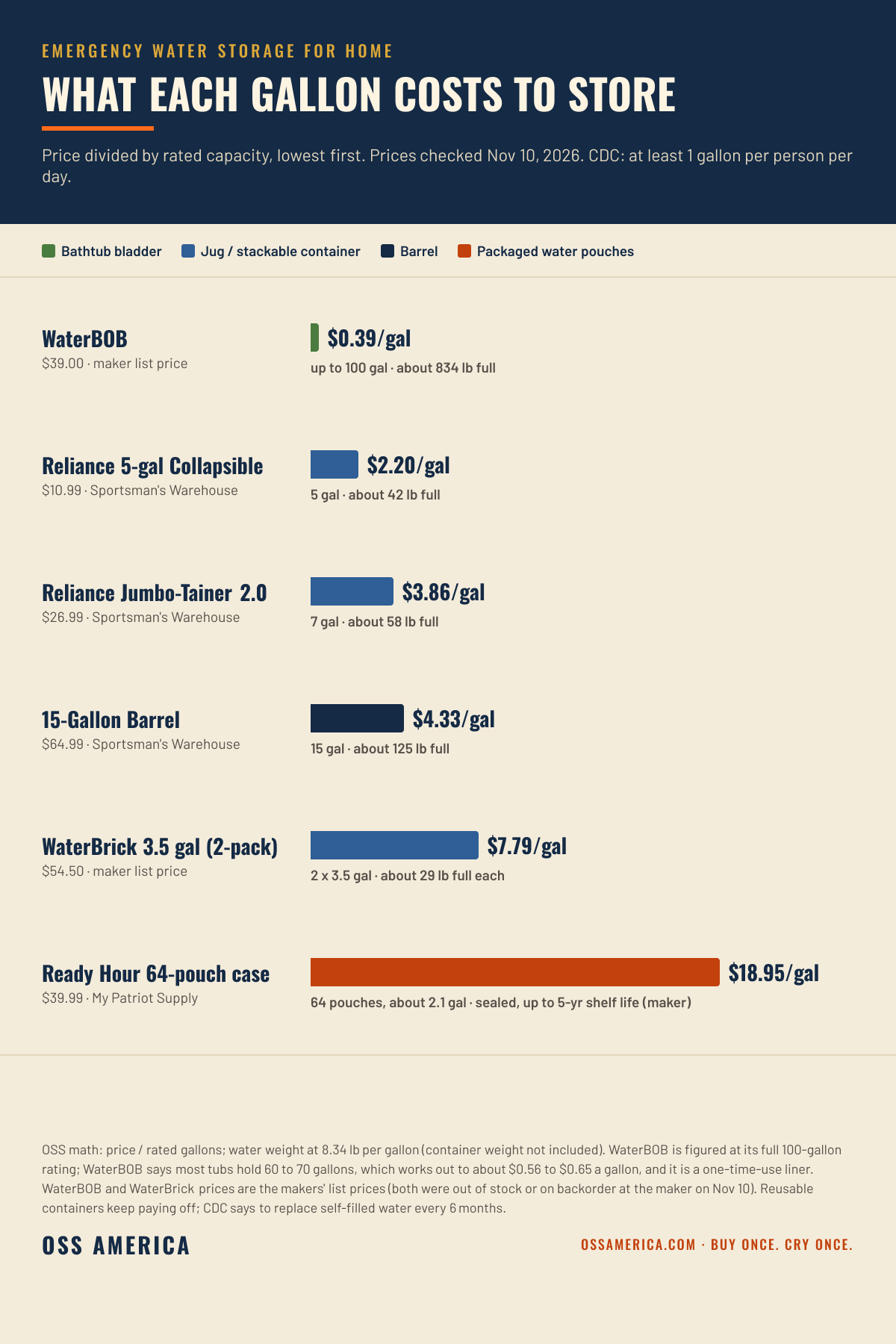
How to read the chart: a bathtub bladder is by far the cheapest way to store a lot of water, but only for a few weeks, only once, and only if you fill it before the taps fail. Among containers that last for years, the Jumbo-Tainer and the 15-gallon barrel cost about $4 per gallon of capacity, and you can refill them every six months for nothing. WaterBricks cost about twice as much because you're paying for stackability. Sealed pouches cost the most by a wide margin, so keep them for go-bags and cars.
The 7 best emergency water storage options, ranked
Reliance Jumbo-Tainer 2.0 7-Gallon Water Container
Best overall water container for most homes
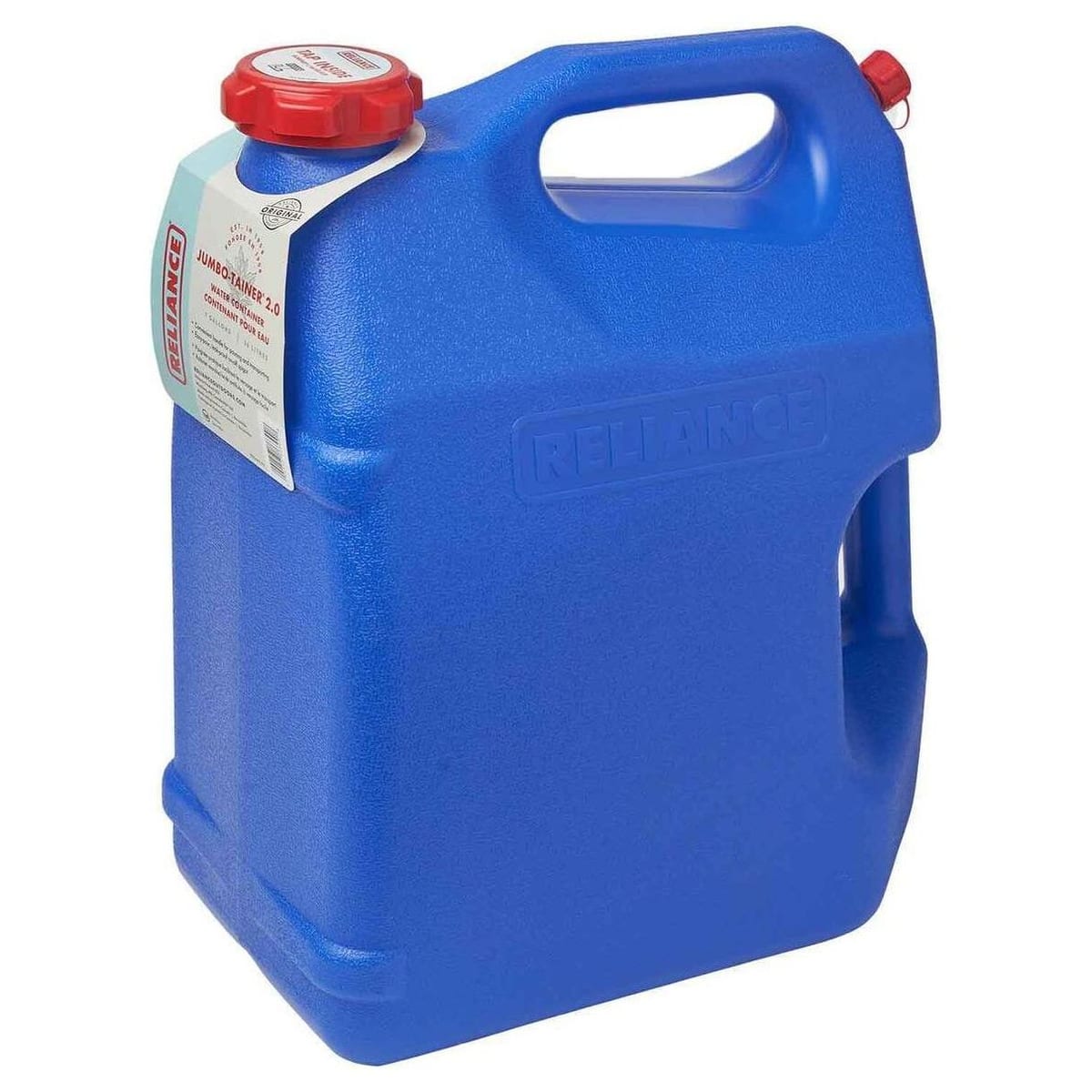
Sportsman's Warehouse: $26.99, in stock, ships to home · Holds: 7 gal · Cost per gallon: $3.86 · Full weight: about 58 lb of water · Owner rating: 4.1 from 15 reviews
If you buy one kind of container, make it a rigid 7-gallon jug, and the Reliance Jumbo-Tainer 2.0 is the one we'd start with. Seven gallons covers one person for a week at the CDC's 1-gallon-a-day minimum. Full, it's light enough for most adults to move, and it's built to be refilled for years. Reliance lists it as FDA approved and BPA free, with a leak-proof hideaway spigot that stores inside the cap and two handles for pouring and tie-down. It measures 15.3 x 8.5 x 18 inches, and Reliance calls the slim shape good for fitting under shelves and counters.
It's the most-reviewed water container at Sportsman's. Owners like the dual handles; one bought six because his older Reliance jugs were "still going strong after 5 years of water storage with no leakage," and he weighed one full at 61.2 pounds. Others are blunt about the problems. One owner had two units leak when laid on their side, another says two of three cracked after a couple of years, and a third advises you to "test the spigot for leaks upon purchase." Fill it, set it on its side for a day, and check before you put it in the closet.
It isn't made to stack when full (owners mention this), so a closet of them takes floor space. Want water you can pump while the jug stands upright? Reliance's Anti-Gravity Water Pump ($14.99 at Sportsman's) replaces the spigot on most of its rigid containers.
| Capacity | 7 gal (26 L) |
| Material | FDA approved, BPA free plastic (Reliance) |
| Size | 15.3 x 8.5 x 18 in |
| Empty weight | 2.9 lb |
| Dispensing | Hideaway leak-proof spigot; optional pump |
| Stackable | No |
| Model | 8630-03 |
Pros
- + Reusable for years, per long-time owners
- + 7 gallons is still movable by one adult
- + Spigot stores inside the cap
- + Most-reviewed container at Sportsman's
Cons
- − Some owners report leaks and cracks
- − Doesn't stack when full
- − About 58 lb full
Gamma2 15-Gallon Water Barrel
Best barrel for long-term storage in small spaces
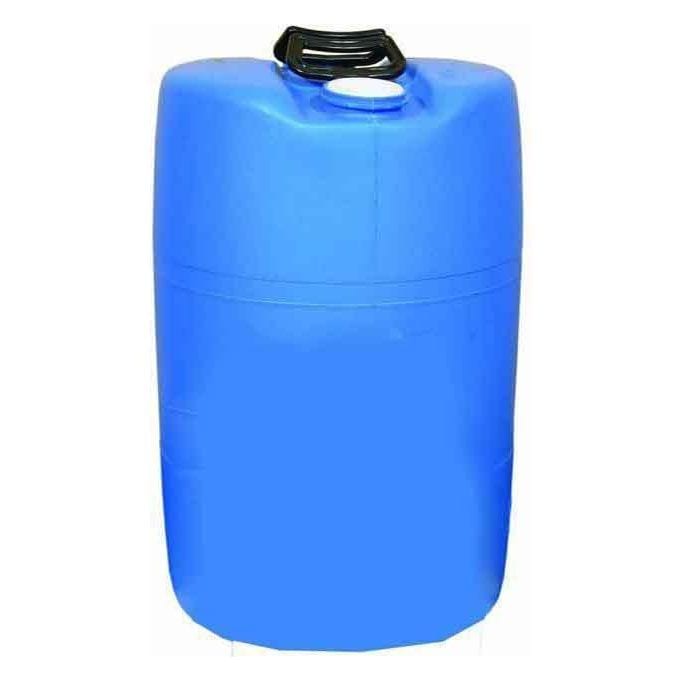
Sportsman's Warehouse: $64.99, in stock, ships to home · Holds: 15 gal · Cost per gallon: $4.33 · Full weight: 130 lb (listing) · Owner rating: 4.5 from 10 reviews
A barrel is how you get past a few days of water without a wall of jugs. Most people picture a 55-gallon drum, but those weigh well over 400 pounds full and need a spot where they'll sit for good. A 15-gallon barrel is the compromise: enough water for one person for about two weeks at the listing's ration (2 quarts for drinking and 2 for light cooking and sanitation), in a footprint that fits a closet or garage corner. Sportsman's lists it as heavy-duty, thick food-grade polyethylene, BPA free, in dark blue that "restricts light and helps control growth of harmful algae and bacteria."
Owners rate it well: 7 of 10 Sportsman's reviews are five stars. "Well made," says one, and another has his barrels "filled and stored. No leaks." One shopper who wanted a 55-gallon found that "2 15's work quite well," and reminds buyers to sanitize with a bleach solution before filling and to add a preservative for multi-year storage.
Plan for two things. First, it has no spigot: an owner bought a pump because pouring a 130-pound barrel isn't realistic, so budget for a siphon or drum pump. Second, the handles are for the empty barrel. One owner warns, "Don't try to lift it by the handle when it is full of water it will come off." Fill it where it will live.
| Capacity | 15 gal |
| Material | Thick food-grade polyethylene, BPA free, dark blue (listing) |
| Full weight | 130 lb (listing) |
| Dispensing | None included; needs a pump or siphon |
| Brand / model | Gamma2 / 7303 |
| Supply | About 2 weeks for 1 person, 6 days for 2, 3 days for 4 (listing's ration) |
Pros
- + Two weeks of water for one person in one container
- + Dark, food-grade plastic built for storage
- + Fits places a 55-gallon drum won't
- + Owners report no leaks
Cons
- − No spigot or pump included
- − Handle won't take the weight when full
- − 130 lb full: fill it in place
WaterBOB Bathtub Emergency Water Storage
Best bathtub bladder for a storm that's on the way
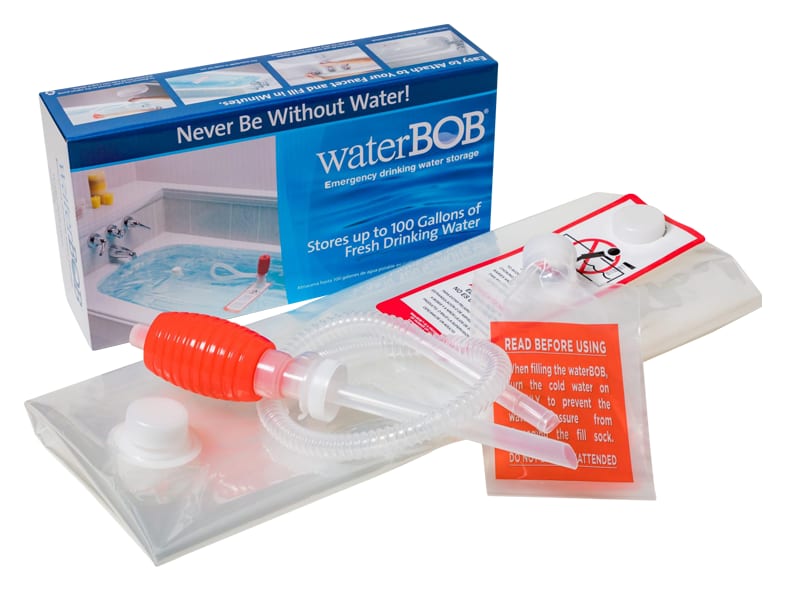
Maker list price: $39.00 (waterbob.com showed it out of stock on November 10, 2026; check Amazon for current availability) · Holds: up to 100 gal · Cost per gallon: about $0.39 to $0.65 · Reuse: one-time use (maker)
This is the product behind this month's search spike: "bathtub bladder water storage" is up 1,900% on Google. The idea is simple. When a hurricane or ice storm is a day or two out, you lay the WaterBOB liner in your bathtub, attach its fill sock to the faucet and fill it. WaterBOB says filling takes about 20 to 30 minutes and the liner holds up to 100 gallons, though it adds that most standard tubs hold about 60 to 70. That's more water than every other pick here combined, for about the price of one jug.
WaterBOB says the liner is heavy-duty 10 mil food-grade LLDPE plastic, and a siphon pump is included to fill pitchers and jugs. Why not just fill the tub? An open tub collects dust, soap residue and whatever the dog drops in. The sealed liner keeps the water separate. WaterBOB says the water stays fresh for up to 16 weeks, depending on humidity and temperature, if you keep sunlight off it with a towel or sheet. For well water it recommends treating the water right after filling.
Know the limits. It's designed for one-time use, so it's a short-notice tool, not long-term storage. It only works if your taps still run when you fill it, which is why it belongs with a few sealed jugs rather than in place of them. And stock is thin: WaterBOB's own site was sold out on November 10, and rival AquaPod's kits were too. If you live in hurricane or ice-storm country, buy one before the forecast turns. We couldn't confirm Amazon's stock or price, so the price here is WaterBOB's list price.
| Capacity | Up to 100 gal (60-70 gal in most tubs, per maker) |
| Material | 10 mil food-grade LLDPE, FDA approved plastic (maker) |
| Fill time | About 20-30 min from the tub faucet (maker) |
| Dispensing | Siphon pump included |
| Freshness | Up to 16 weeks, kept out of sunlight (maker) |
| Reuse | Designed for one-time use |
Pros
- + Cheapest storage per gallon by far
- + Stores flat in a drawer until a storm comes
- + Keeps tub water sealed off from dust and residue
Cons
- − Only useful if you fill it before the water goes
- − One-time use
- − Sold out at the maker on November 10
WaterBrick 3.5-Gallon Stackable Water Container (2-pack)
Best stackable water storage for apartments and closets
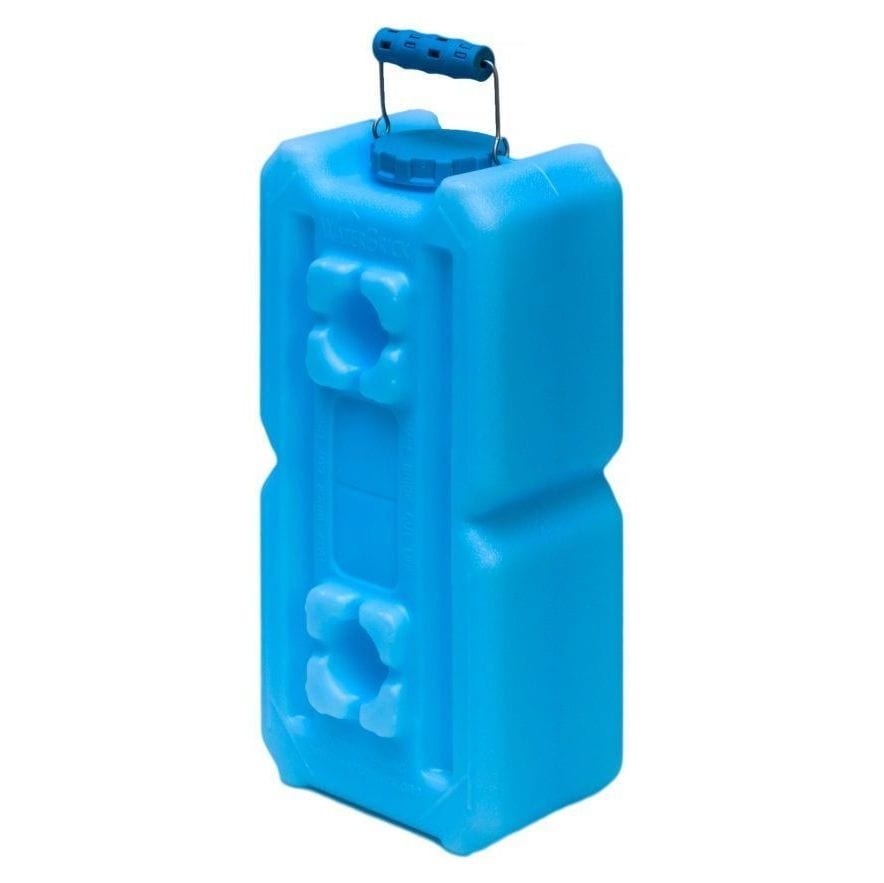
Maker list price: $54.50 for a 2-pack (on backorder at waterbrick.org and sold out at Survival Frog on November 10, 2026; check Amazon for current availability) · Holds: 3.5 gal each · Cost per gallon: $7.79 · Full weight: about 27 to 30 lb each (maker)
If you live in an apartment, floor space is the problem, not money. WaterBricks are 3.5-gallon blocks, 9 x 18 x 6 inches, that cross-stack like building bricks up to 4 feet high, according to the maker, so 10 of them (35 gallons) can fill a closet floor or slide under a bed. WaterBrick says the container is HDPE, the lid polypropylene and the gasket TPE, all BPA free and FDA compliant, with UV protectant.
Other things to like: each brick weighs about 27 to 30 pounds full (the maker's two pages differ), so anyone in the family can carry one, and the handle comes off for stacking. The 3¼-inch lid opening is wide enough to reach into, so a brick can store rice or beans instead of water. WaterBrick sells a spigot separately for $19.95.
The catch is price. At $7.79 per gallon, it costs about twice as much per gallon as the Jumbo-Tainer. It's also hard to get right now. The maker lists the blue 2-pack on backorder, and Survival Frog had every WaterBrick variant sold out on November 10. The price shown is WaterBrick's own list price; we couldn't confirm Amazon's stock or price.
| Capacity | 3.5 gal each (2-pack = 7 gal) |
| Size | 9 x 18 x 6 in each |
| Material | HDPE body, polypropylene lid, TPE gasket; BPA free, FDA compliant (maker) |
| Weight | 2.52 lb empty; about 27-30 lb full (maker) |
| Stacking | Cross-stacks up to 4 ft (maker) |
| Dispensing | Spigot sold separately |
Pros
- + Stacks safely in tight spaces
- + Light enough for anyone to carry when full
- + Wide lid also stores dry food
Cons
- − Costs about twice as much per gallon as a Jumbo-Tainer
- − Spigot costs extra
- − Backordered or sold out at stores we checked
Reliance 5-Gallon Collapsible Water Jug
Best budget pick (and best for a car or go-bag)
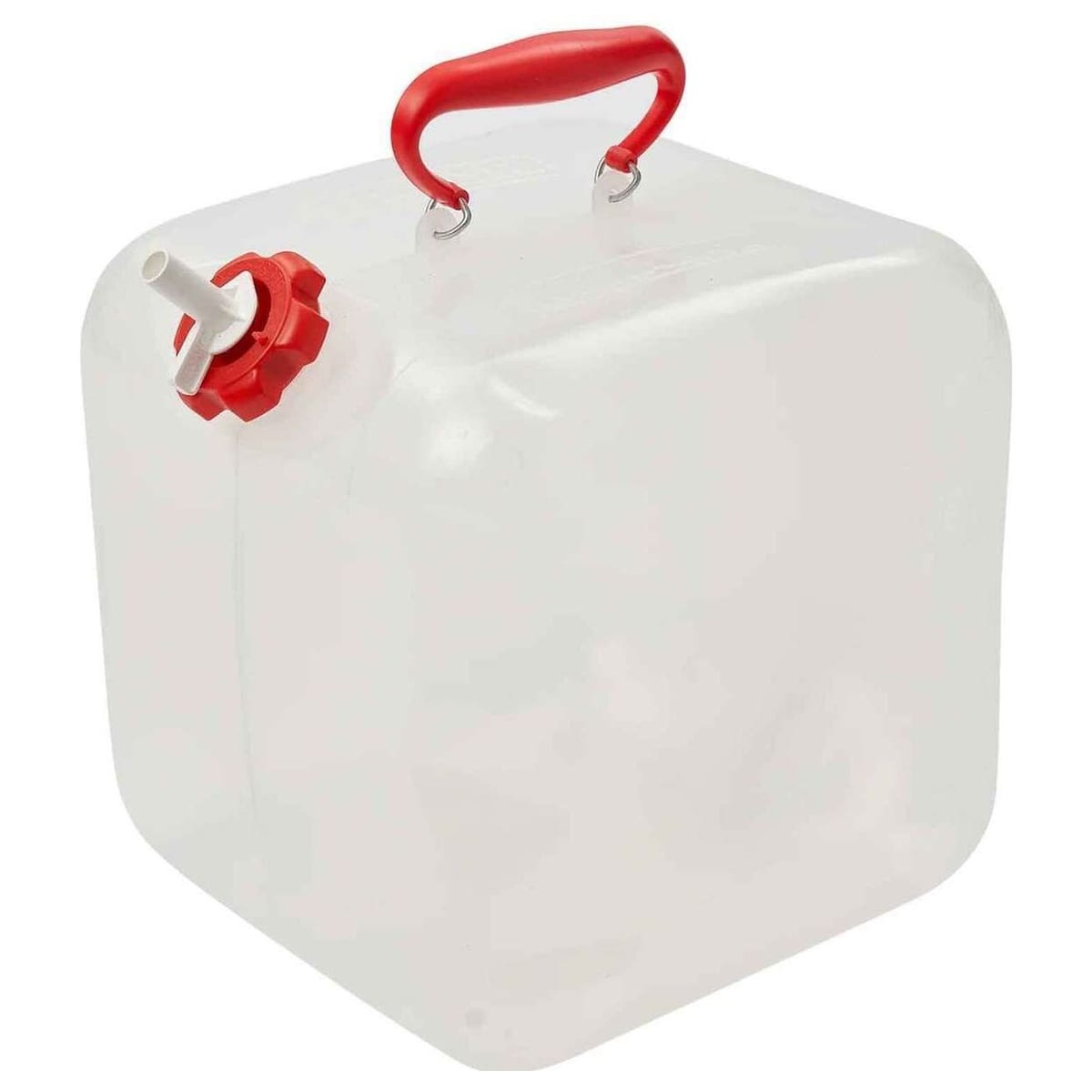
Sportsman's Warehouse: $10.99, in stock, ships to home ("only a few left" on November 10) · Holds: 5 gal · Cost per gallon: $2.20 · Empty weight: 0.65 lb · Owner rating: 3.7 from 10 reviews
For about $11, this is the cheapest way to hold 5 gallons, and empty it folds flat enough to keep in a trunk, a bug-out bag or a kitchen drawer. Reliance makes it from high-grade polyethylene, BPA free, with a leak-proof on/off spigot and a fold-down handle, and says it stays flexible in extreme cold.
Owner reviews tell you how to use it. One has had his "since late 1990's" without a crack. Others report problems over time: one says about half of his were "leaking in <18 months," and another had two crack at the corners after winter storage. One owner says he's "not sure I would store water in them for long periods." Our read: collapsibles are great for filling up when a storm is coming, carrying water home from a distribution point, or hauling water to a car or camp. For water that sits in a closet for six months, buy a rigid jug.
Stock was low on November 10. Reliance's newer Fold-A-Carrier 5 Gallon ($11.49, clear so you can see the water level, no reviews yet) and the Alexapure 5 Gallon Collapsible ($16.99 at My Patriot Supply) are the alternatives.
| Capacity | 5 gal |
| Material | High-grade polyethylene, BPA free (Reliance) |
| Empty weight | 0.65 lb |
| Dispensing | Leak-proof on/off spigot |
| Storage | Folds flat when empty |
| Model | 500003 |
Pros
- + About $11 for 5 gallons
- + Folds flat for a car or go-bag
- + Built-in on/off spigot
Cons
- − Owners report leaks and cracks over time
- − Not ideal for long-term storage
- − Low stock at Sportsman's
Ready Hour Emergency Drinking Water 64-Pouch Case
Best sealed, grab-and-go drinking water
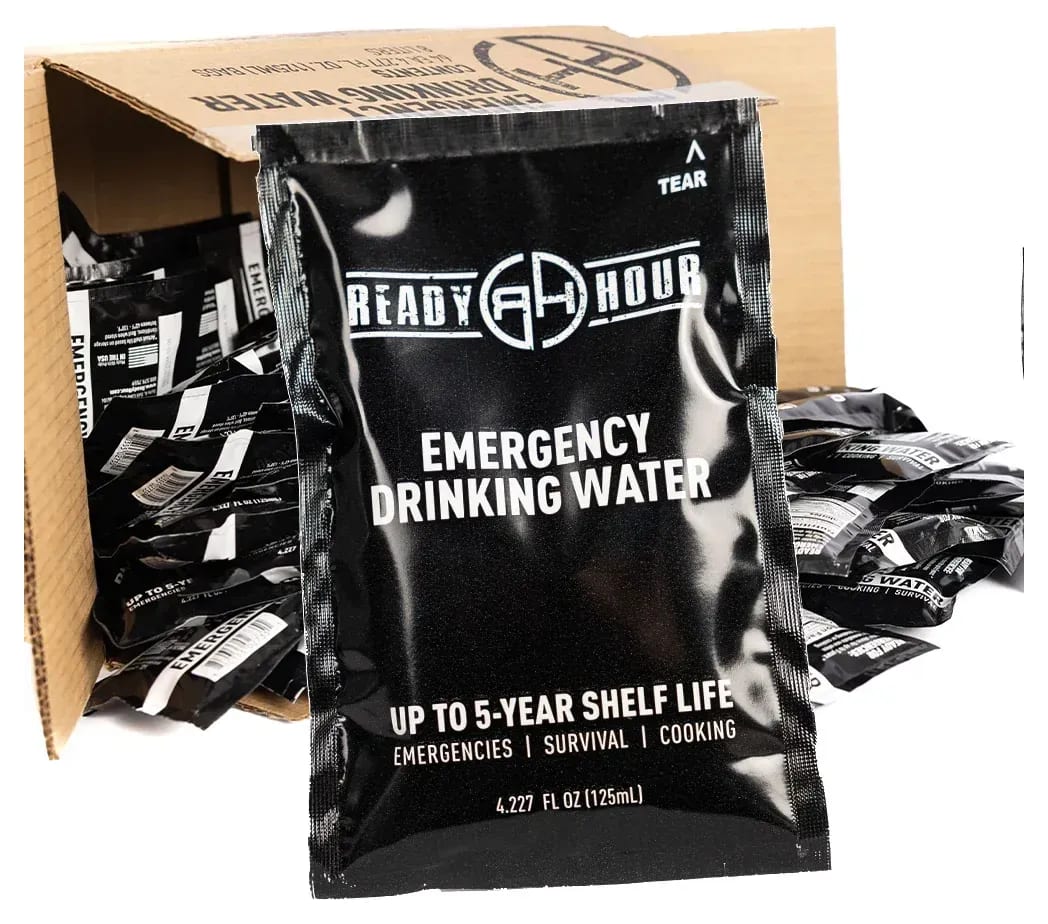
My Patriot Supply: $39.99 for 64 pouches, available November 10, 2026 · Holds: about 2.1 gal (64 x 4.227 fl oz) · Cost per gallon: $18.95 · Shelf life: up to 5 years (maker)
Water you store yourself has to be swapped out every six months, according to both the CDC and Ready.gov. Commercially sealed water lasts longer and needs no thought, which is why the CDC calls unopened bottled water "the safest and most reliable source of water in an emergency." Ready Hour's pouches are the prepper version of that. Each one holds 4.227 ounces of reverse-osmosis purified water in a BPA-free, four-layer pouch that's 6 x 4 x ½ inches. Ready Hour rates them for up to five years, and a case of 64 packs into a 13 x 9⅞ x 6¾-inch box.
It's the top seller in My Patriot Supply's water containers collection when sorted by best-selling. Pouches are good for the places a jug won't go: a go-bag, each car, a desk drawer at work, a kid's school kit.
Don't treat it as your main supply, though. At $18.95 per gallon it's the most expensive water here, and a case is roughly two gallons, about two days of the CDC minimum for one person. Use it alongside the jugs and barrels, not instead of them.
| Contents | 64 pouches x 4.227 fl oz (about 2.1 gal) |
| Pouch size | 6 x 4 x ½ in |
| Case size | 13 x 9⅞ x 6¾ in |
| Water | Reverse-osmosis purified (maker) |
| Shelf life | Up to 5 years (maker) |
| Packaging | BPA free, four-layer pouch |
Pros
- + Sealed and ready, nothing to rotate for years
- + Fits go-bags, cars and desks
- + Top seller in its My Patriot Supply collection
Cons
- − Most expensive water per gallon here
- − A case is only about 2 gallons
- − Single-serve pouches create a lot of trash
Aquamira Chlorine Dioxide Water Treatment
Best add-on: keep stored water fresh longer
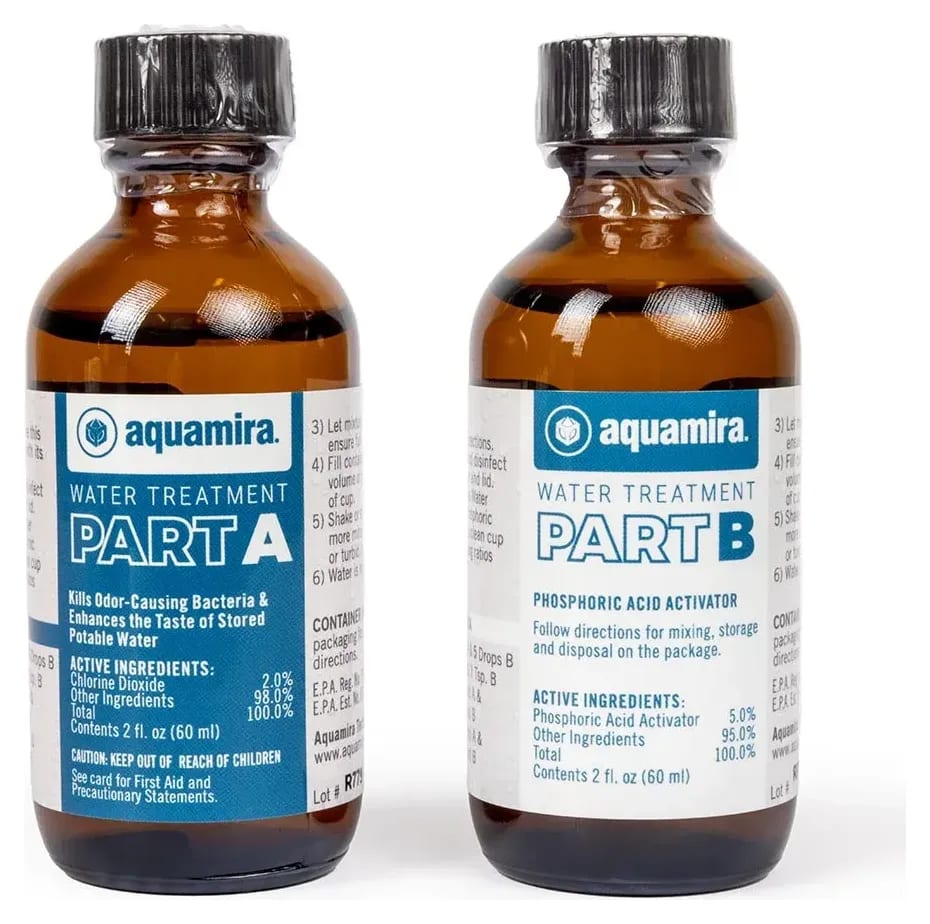
My Patriot Supply: $19.99, available November 10, 2026 · Treats: up to 60 gal per pack (listing) · Cost per gallon treated: about $0.33 · Type: two-part chlorine dioxide
This isn't a container, but it belongs in the same order as one. Aquamira's two-part kit is a chlorine dioxide treatment (Part A) plus a phosphoric acid activator (Part B). You pre-mix equal parts in a cup and add it to stored water. The listing says one pack treats up to 60 gallons and gives the doses: 1 teaspoon of each part per 5 gallons, 2 tablespoons of each per 30 gallons, and 4 tablespoons of each per 60 gallons. It carries EPA Reg. No. 71766-1, it's made in the USA, and it's the top seller in My Patriot Supply's water treatment collection.
Two honest notes. My Patriot Supply's copy says the treatment helps keep stored water from spoiling but doesn't give a storage time, so follow the CDC's six-month rotation unless the product label says otherwise. And the listing says to clean and disinfect the container and lid before treating. That matches the CDC's steps below.
If you want a way to make questionable water drinkable after your stored water runs out, add Potable Aqua purification tablets ($9.99 for 50 at Sportsman's) or a filter from our water filter guide. Ready.gov notes that boiling is the safest treatment method if you have the fuel.
| Type | Two-part chlorine dioxide (Part A) + phosphoric acid activator (Part B) |
| Treats | Up to 60 gal per pack (listing) |
| Dose | 1 tsp each per 5 gal; 2 tbsp each per 30 gal; 4 tbsp each per 60 gal |
| Registration | EPA Reg. No. 71766-1 |
| Made in | USA (listing) |
Pros
- + About $0.33 per gallon treated
- + Clear dosing for jugs and barrels
- + Top seller in its collection
Cons
- − Two-part mixing is fussier than drop-in tablets
- − Listing gives no storage-life figure
Which should you buy?
- You're starting from zero: two or three Jumbo-Tainers gets a couple through about a week at the CDC minimum, and you can add more later.
- You want two weeks for a family: four 15-gallon barrels hold 60 gallons. Add a pump and a bottle of Aquamira.
- You live where hurricanes or ice storms give a day's warning: keep a WaterBOB in the bathroom drawer and fill it when the forecast turns.
- You live in an apartment: WaterBricks stack under a bed or along a closet wall.
- You're on a tight budget or want water for the car: a Reliance 5-gallon collapsible, filled when you need it.
- You want water you never have to rotate: a case of Ready Hour pouches per go-bag or vehicle.
What to look for in emergency water storage
Food-grade, BPA-free and opaque
The CDC says it's best to use FDA-approved food-grade containers and never containers that held toxic chemicals like bleach or pesticides. If you aren't sure whether a container is food-grade, it says to ask the maker. Every pick here is sold for drinking water, and the makers describe them as food-grade or FDA approved and BPA free. Darker, opaque plastic, like the blue barrel, also blocks light, which the barrel's listing says helps control algae.
Weight decides where it lives
Water weighs about 8.34 pounds a gallon. A 7-gallon jug is about 58 pounds, a 15-gallon barrel is 130 pounds by its listing, and a 55-gallon drum is well over 400. Put big containers where they'll stay, and keep some water in sizes you can carry to the car.
Getting water out
Jugs have spigots. Barrels need a pump or siphon, and bathtub bladders come with one. The CDC says to use a clean scoop each time and never to touch the water or reach in with your hands.
Rotation and labels
The CDC and Ready.gov both say to replace self-filled water every six months, to label each container "drinking water" with the date, and to keep it cool (the CDC says 50 to 70°F), out of direct sunlight, and away from gasoline and pesticides. Commercially sealed water follows its own expiration date. One easy habit: rotate when the clocks change in spring and fall.
How to clean and fill a water container (CDC steps)
1. Wash with soap and rinse completely. 2. Sanitize with 1 teaspoon of unscented liquid household chlorine bleach (5% to 9% sodium hypochlorite) in 1 quart of water. 3. Cover and shake so the solution touches every inside surface. 4. Wait at least 30 seconds, then pour it out. 5. Air-dry. 6. Fill with clean tap water and cap tightly. Label it with the date.
The CDC also says to keep a bottle of unscented bleach on hand to disinfect water if you need to. Pair your water with food from our emergency food guide, a weather radio for boil notices, and the rest of a family emergency kit.
Frequently asked questions
How much emergency water should I store at home?
The CDC says at least 1 gallon per person per day for 3 days, and to try for a 2-week supply if possible. That's 12 gallons for a family of four for three days, or 56 gallons for two weeks. Store more for pets, people who are sick or pregnant, and hot climates.
How long can you store tap water in a container?
Both the CDC and Ready.gov say to replace water you store yourself every six months. Commercially bottled or sealed water should be used by its expiration date; Ready Hour, for example, rates its sealed pouches for up to five years.
Do bathtub water bladders like the WaterBOB work?
They're designed for short-notice storage. You fill the liner from your tub faucet before an expected outage. WaterBOB says its liner holds up to 100 gallons (most tubs hold 60 to 70), fills in about 20 to 30 minutes, keeps water fresh for up to 16 weeks out of sunlight, and is made for one-time use. It only helps if you fill it while your water still runs. WaterBOB lists it at $39.00, but it was sold out on the maker's site on November 10, 2026.
Is a 55-gallon water barrel better than smaller containers?
A 55-gallon drum stores the most water in one spot but weighs well over 400 pounds full, so it can't be moved and needs a pump. Many families split storage into 15-gallon barrels and 7-gallon jugs so some water can be carried or taken in the car. One Sportsman's owner who wanted a 55-gallon says two 15-gallon barrels "work quite well."
Do I need to add anything to stored tap water?
If your tap water is already chlorinated, the CDC's guidance is to sanitize a food-grade container, fill it with clean water, seal it and replace it every six months. Many people also add a preserver such as Aquamira's chlorine dioxide treatment, which its listing says treats up to 60 gallons per pack; follow the label. Treat well water, as WaterBOB advises for its liner.
Where is the best place to keep stored water?
The CDC says somewhere cool (50 to 70°F), out of direct sunlight and away from toxic substances like gasoline or pesticides. That rules out many garages in summer. A closet, basement or the space under a bed usually works, as long as the floor can take the weight.
What's the cheapest way to store emergency water?
Per gallon, a bathtub bladder (about $0.39 to $0.65 a gallon for WaterBOB at its list price) is cheapest for short-term storage. For water that's always ready, a Reliance 5-gallon collapsible ($10.99) or Jumbo-Tainer 2.0 ($26.99) filled from your tap costs only the container, since you can refill it every six months for free.
The bottom line
Most homes should start with a few Reliance Jumbo-Tainer 2.0 jugs, which are refillable, movable and about about $27 each. Add a 15-gallon barrel or two to reach the CDC's two-week goal, and keep a WaterBOB in the bathroom drawer for storms with warning. Apartment dwellers should look at WaterBricks. Whatever you choose, clean it, fill it, date it and set a reminder to rotate it in six months.
Get the free Blackout-Ready Home Checklist — join the OSS America newsletter for honest gear guides like this one, straight to your inbox.
Talk soon,
OSS AMERICA
God · Family · Country · Gear that earns its keep.
FTC Disclosure: OSS America contains affiliate links. We earn a commission from qualifying purchases at no extra cost to you. Every pick is research-based: specs, verified prices and owner reviews.
More reviews
 Top PickSurvival
Best Home Emergency Survival Kits for Families: 72-Hour, 2-Week and 30-Day
Home emergency kits for families compared by duration: 72-hour food and gear, water storage, 2-week and 30-day food supplies, with November 8 prices and cost per person-day.
 Top PickSurvival
Best Survival Knives (2026): 8 Fixed Blades Ranked
Gerber StrongArm, KA-BAR USMC, Buck 119, Buck Selkirk, ESEE Izula, Cold Steel SRK and more: eight fixed-blade survival knives compared on steel, blade length, weight and real October 2026 prices.
 Top PickSurvival
Best Emergency Food Supply (2026): 8 Kits Ranked by Real Cost per Day
We ranked eight emergency food kits from Ready Hour, My Patriot Supply, Emergency Essentials and Survival Fresh by what one 2,000-calorie day really costs, plus protein, shelf life and storage.
 Top PickSurvival
Best First Aid Kits (2026): 8 Picks for Home, Truck, Camp and Dogs
MyMedic MyFAK and Recon, Adventure Medical Kits Mountain Explorer, Sportsman 300, Family and Trail Dog, and more: real October 2026 prices, contents, cost per piece and honest pros and cons.
 Top PickSurvival
Best Emergency Radios (2026): 7 Crank, Solar and Weather Radios Compared
Midland ER310, ER210 and ER310PRO, Kaito KA500, Ready Hour 4-in-1, FosPower A1 and Midland ER10VP: real October 2026 prices, battery size, power options and honest pros and cons.
 Top PickSurvival
Best Bug Out Bags (2026): Premade vs. Build Your Own
Premade go bags, 72-hour kits and bag components from Be Prepared, My Patriot Supply, Camping Survival and Survival Frog, compared on contents, food, weight and real October 2026 prices.