Skip to content
Launching Independence Day— : — : — : —Join the waitlist →
OSS America
Field-TestedShooting

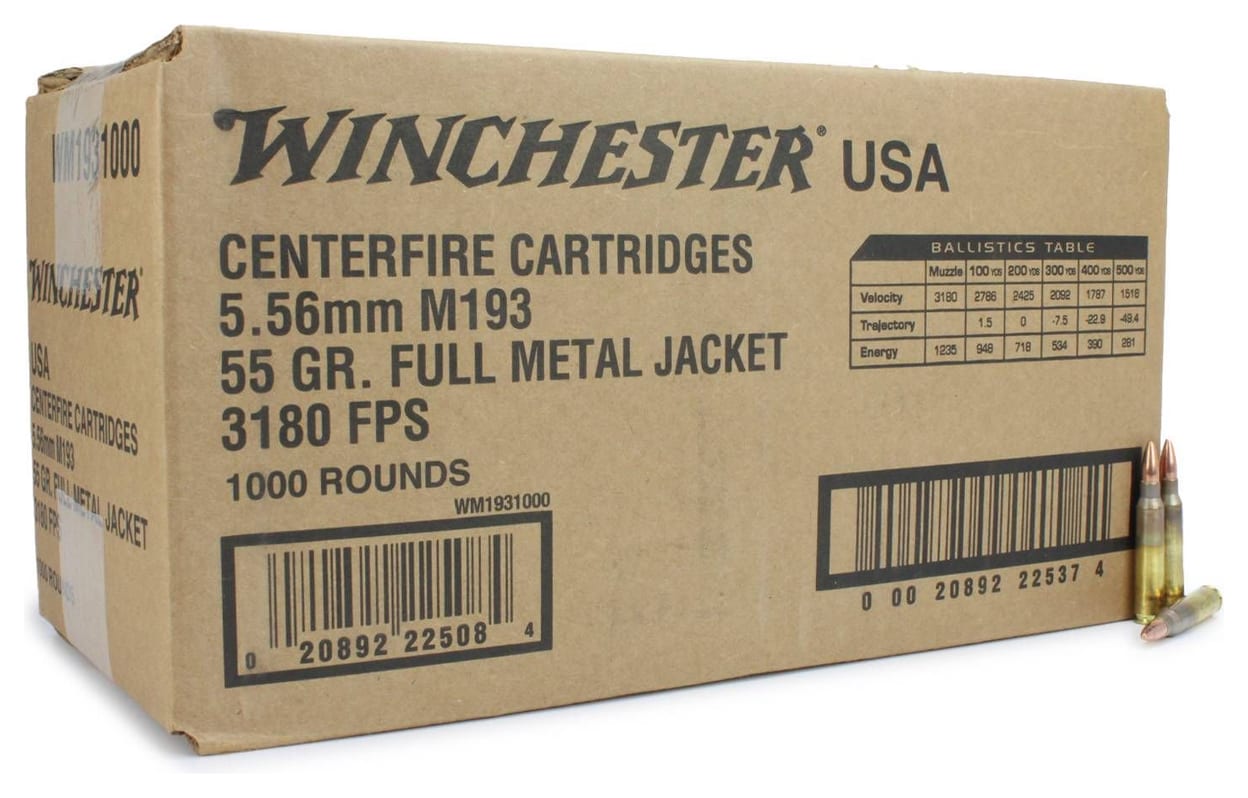
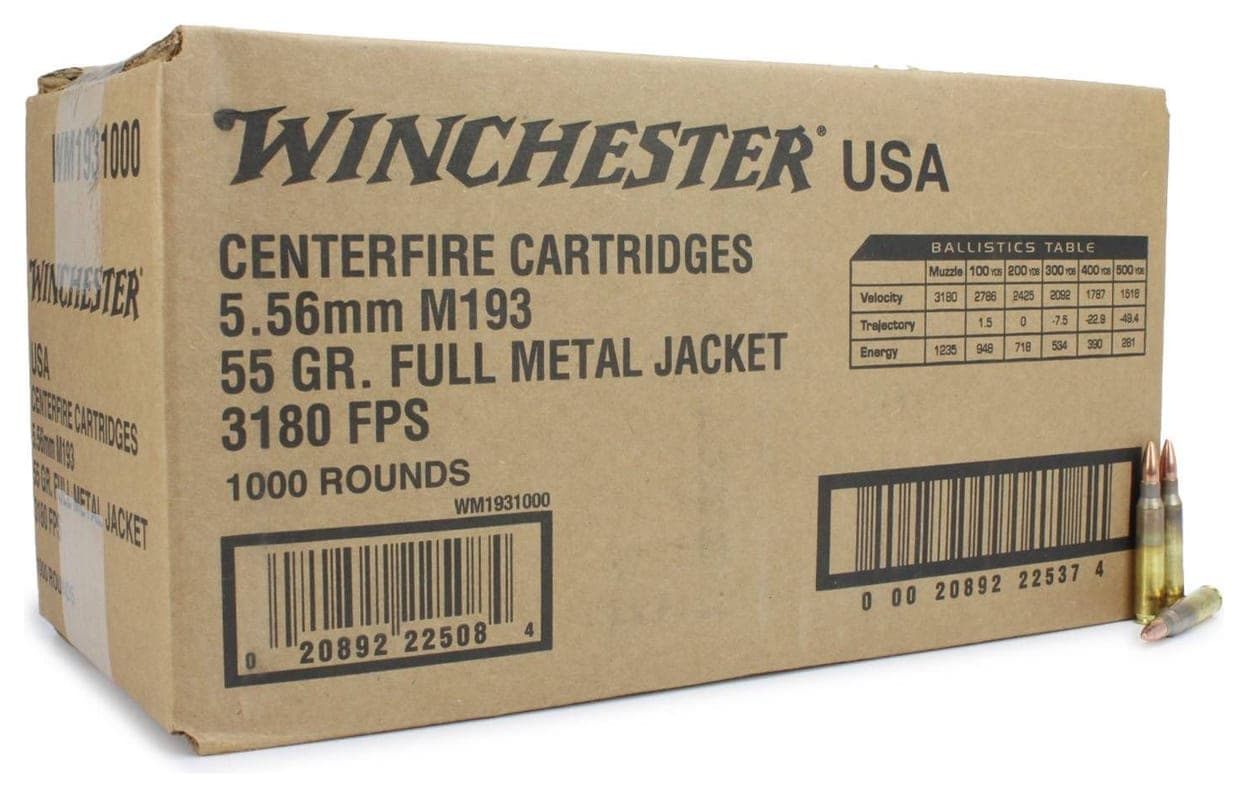
Winchester USA 5.56 M193 Bulk (1000 Rounds): The Smart Way to Stock the AR-15
RARod Abbondanza · Founder June 13, 2026 5 min read How we test
Winchester USA 5.56 M193 Bulk (1000 Rounds): The Smart Way to Stock the AR-15

Advertisement

Some rifles get sold on marketing. The Benjamin Marauder Gen 3 gets sold on trigger pulls. Twenty years into its life, this is still the PCP air rifle serious shooters recommend when a friend asks the honest question: "What do I actually buy first?" Not the hype king. Not the imported target rig. The Marauder — because it works, it's quiet, it's accurate, and it doesn't punish beginners for buying it before they were ready.

The Gen 3 is Crosman's third major revision of the platform, and it's the one that fixed the last complaints people had about the older guns. Better trigger. Cleaner fill. More consistent shot strings straight out of the box. What used to be a tinkerer's rifle is now a plug-and-play PCP that new shooters can pick up and use without spending a weekend on YouTube tutorials.

Benjamin Marauder Gen 3 PCP air rifle

Check today's price on the Marauder Gen 3 at Pyramyd Air →

The Quick Verdict

If you're deciding right now: the Marauder Gen 3 is the best value in serious PCP air rifles under $700. Nothing at the price point matches its combination of factory shroud (backyard-quiet without an aftermarket suppressor), 3,000 PSI fill, adjustable two-stage trigger, and choked barrel accuracy. The Umarex Gauntlet 2 is cheaper and regulated; the Air Venturi Avenger is cheaper and regulated too. Neither is as quiet, and neither has the parts availability or the two-decade community knowledge base that comes with owning a Marauder.

The FX Impact is better in every measurable way — and it costs three times as much and requires you to already know what you're doing. This is the rifle that gets you shooting today.

Real Spec Sheet (Manufacturer Published)

These are pulled straight from Crosman/Benjamin's product literature for the Marauder Gen 3 platform. No fluff, no inflated marketing numbers — just what the manufacturer publishes.

Spec Detail
Calibers offered.177, .22, .25
ActionBolt-action (side-lever available on select variants)
Fill pressure3,000 PSI (207 bar)
Manufacturer velocity (.177, alloy pellet)Up to 1,100 FPS
Manufacturer velocity (.22, alloy pellet)Up to 1,000 FPS
Manufacturer velocity (.25, alloy pellet)Up to 900 FPS
Magazine10-shot (.177 / .22), 8-shot (.25)
BarrelChoked, shrouded rifled steel
TriggerTwo-stage, fully adjustable
StockHardwood (walnut)
Overall length~42.8 in
Weight~8.2 lb (unscoped)
Optics railPicatinny/Weaver dovetail (no iron sights)

The velocities above are the manufacturer's published maximums with lightweight alloy pellets. In the real world with standard lead pellets (which is what most people shoot), expect roughly 900–950 FPS in .22 and 850–900 FPS in .25 — plenty for pest control, small-game hunting, and 50-yard target work.

The Gen 3 Upgrades That Actually Matter

Crosman didn't rebadge an old rifle and call it Gen 3. The changes are meaningful, and every one of them fixes something owners of the Gen 1 and Gen 2 used to complain about on the forums.

  • Redesigned trigger. The Gen 3 ships with a genuinely good adjustable two-stage trigger from the factory. Older Marauders required a trigger-job (or the "GTX" drop-in) to feel right; Gen 3 owners can leave it alone.
  • Improved fill probe and manometer. The onboard air-pressure gauge is easier to read, and the fill probe is less finicky. Small change, huge quality-of-life improvement when you're topping off in the field.
  • Better factory shot-string consistency. Older guns benefited from a hand-tune to get the velocity curve flat; the Gen 3 arrives closer to optimal out of the box, which means new shooters don't have to know what a "shot string" is to get good groups.
  • Refined bolt/stock fit. The bolt cycles smoother and the stock inletting is cleaner than the Gen 2 wood.

None of these are revolutionary. Together, they make the Marauder finally feel like a $600 rifle instead of a $400 rifle that needs $200 in fixes.

Backyard-Quiet, Pest-Control Effective

The Marauder's factory shrouded barrel is the feature that sells this rifle to suburban owners. In .22 caliber with standard-weight lead pellets, most owners report the report is roughly on par with a decent air-gun moderator — quiet enough that you can shoot in a suburban backyard without the neighbors calling anyone. Louder than a spring gun with a moderator. Much quieter than an unshrouded PCP.

That single feature is why the Marauder is the go-to answer for backyard pest control: squirrels in the attic, rabbits in the garden, starlings on the barn. It puts the game down cleanly at real distances (20–50 yards for most owners) without the acoustic signature that draws attention.

Who It's For

  • The first-time PCP buyer who wants a rifle they won't outgrow in a year.
  • The suburban pest-control shooter dealing with tree rats, rabbits, or nuisance birds and needs quiet, humane accuracy.
  • The small-game hunter in states or counties that allow air-gun hunting for squirrel, rabbit, or larger with the .25.
  • The tinkerer who wants a platform with 20 years of aftermarket parts, mods, and community knowledge on tap.
  • The budget-conscious buyer who wants FX-adjacent capability without spending FX money.

Who It's NOT For (Honest)

The Marauder isn't the right rifle for everyone. If any of these describe you, buy something else and don't waste your money:

  • You don't want to buy a hand pump, tank, or compressor. A PCP rifle is not a self-contained system. You need a way to fill it — a Benjamin hand pump ($200), a scuba/carbon-fiber tank ($300–$800), or a small compressor ($500–$1,500). Factor this in before you buy.
  • You want a rifle that arrives fully regulated. The Marauder Gen 3 is unregulated from the factory. It shoots a flatter curve than older Marauders, but if you want true regulated consistency (same FPS shot-to-shot across the whole fill), look at the Air Venturi Avenger or a regulator upgrade.
  • You want a target rifle for 100-yard-plus benchrest. The Marauder is a 50-yard rifle in real hands. For long-range field-target or extreme benchrest, step up to an FX or Daystate.
  • You want iron sights. The Marauder ships without them. You need to add a scope or red-dot.
  • You want light and packable. At 8.2 pounds unscoped, this is a full-size rifle. Not a walkabout gun.

Competitor Comparison

The Marauder doesn't exist in a vacuum. Here's how it stacks up against the three PCP rifles most commonly cross-shopped with it. All three are legitimate alternatives depending on what you value.

Rifle Price Regulated? Best For
Benjamin Marauder Gen 3 ~$600 No (semi-flat curve) Best all-around value; backyard-quiet
Umarex Gauntlet 2 ~$400 Yes Lowest-price entry into regulated PCP
Air Venturi Avenger ~$330 Yes (adjustable) Tinkerer's regulated budget king
FX Impact M3 ~$2,000+ Yes Top-tier target/long-range

Umarex Gauntlet 2 (~$400) — The Gauntlet undercuts the Marauder by $200 and adds a regulator the Marauder doesn't have. What it doesn't have: the Marauder's factory shroud (Gauntlet is noticeably louder), the same parts availability, or the twenty-year community of tuners. If your budget caps at $400 and you don't need backyard-quiet, this is a legitimate pick. If you'd rather have quiet than regulated, get the Marauder.

Air Venturi Avenger (~$330) — The Avenger is the tinkerer's darling: fully regulated, externally adjustable, and priced like a budget rifle. Groups well, shoots flat, and the community has figured out every mod worth doing. What you give up: a plastic stock (not wood), a louder report than the Marauder, and a shorter track record. Great rifle for someone who enjoys the tuning journey. Less good for someone who wants to open the box and go shoot.

FX Impact M3 (~$2,000+) — The dream rig. Better in every measurable way: adjustable everything, superior barrels, higher shot-count, target-grade regulation. It's also three to four times the price of a Marauder, and it assumes you already know what you're doing. Buy this after the Marauder, not instead of it.

Pro Tips (Real, Not Filler)

Owners who have run the Marauder for a season learn a handful of things that aren't in the manual. Here are the ones that actually change your results.

  • Chrono your pellets before you commit. The Marauder is famously pellet-picky in the best way — it will shoot some pellets phenomenally and others merely well. Buy a sampler pack (JSB, H&N, Crosman Premier) and shoot 10-shot groups at 30 yards with each. Whichever tightens up wins your business for the next case.
  • Fill to 3,000 PSI, shoot to about 2,000, refill. The Marauder's sweet spot on the shot curve lives roughly in the middle third of the fill. Shooting all the way down past 1,800 PSI drops velocity noticeably. Refill sooner and your groups stay tighter.
  • Buy a hand pump AND plan for a tank or compressor. The hand pump is the "you can start today" solution. It's also exhausting to fill from empty. Most owners run a hand pump for the first month, decide they hate it, and buy a scuba/carbon-fiber tank or a small compressor. Budget for both.
  • Torque your scope base and rings properly. A shrouded PCP has almost no recoil, so people skip torquing the optics. Then their zero drifts and they blame the rifle. Use a FAT wrench, follow the scope-maker's torque spec, and confirm zero after 100 rounds.
  • Clean the barrel with a felt pellet, not a rod. Air rifle barrels don't like steel rods. Push a felt cleaning pellet through every 500–1,000 shots. That's the whole maintenance program.
  • Store it partially charged (not empty, not full). Leaving a Marauder empty for months can be hard on seals. Leaving it full can be hard on seals. Somewhere around 1,500–2,000 PSI for long-term storage is the community consensus.

Realistic Range-Day Scenarios: What a 1,000-Round Case Actually Covers

The abstract case-math is one thing. What the ammunition actually looks like in a real month of range trips is another. Here are four honest scenarios pulled from what typical AR-15 owners actually burn through a case doing — no theory, just realistic round counts against realistic drills.

Scenario 1: The First-Timer Intro Session

New AR owner, first live-fire day at a public range with 25-yard and 50-yard lanes. Goal is basic zeroing and getting a feel for the trigger. A typical intro session breaks down to roughly 20 rounds to confirm mechanical zero at 25 yards, another 40-60 rounds shooting five-shot groups off a rest to true the optic, and a final 40 rounds of slow deliberate practice on paper. Total burn: 100-120 rounds. Impact against a 1,000-round case: about 10-12% of the shelf. A single case underwrites roughly eight to ten intro sessions like this — enough for a full year of monthly range time for an owner still learning fundamentals.

Scenario 2: The Two-Adult Household Training Together

Couple or two housemates both training the same rifle across an afternoon at an outdoor range. Two shooters trading a rifle turns 20-round boxes into a distraction — every fifteen minutes someone is tearing tape off another carton. A 1,000-round case eliminates that friction. Realistic burn for a serious two-adult session: 150-200 rounds each, so 300-400 rounds off the case in one afternoon. A case covers roughly three to four full family range days like this. The unit-economics gap between case-buying and 20-round-box buying becomes obvious around round 200, when you realize the pile of empty boxes on the bench is what you would have been paying convenience markup on.

Scenario 3: The Weekend Carbine Class

Two-day defensive carbine class, private instructor, structured drills. This is where a case can actually get burned in a single weekend. Round counts for reputable two-day AR-15 courses typically run 500-800 rounds — the mandated round count for the class itself, before you factor in the extra ammo you inevitably want for post-class practice. A single Winchester USA case is functionally the minimum threshold to show up prepared for a course like this and still have a few hundred rounds left on the shelf after. Serious students buy two cases before enrolling.

Scenario 4: The Once-a-Month Maintenance Shooter

Existing AR owner who is not learning, not competing, and not preparing for a class — just wants to run the rifle regularly so it stays a familiar tool. Sixty to eighty rounds per month is the sustainable pace. A case at that cadence lasts roughly 12-16 months. This is the profile a bulk case is built for: modest monthly burn, no urgency, ammunition available whenever the range window opens up. The shooter who buys one case per year and stays consistent gets more actual practice than the shooter who buys a 20-round box every trip and quietly loses six months to "I'll grab some on the way."

Long-Term Storage: The 2-Year Kit vs the 10-Year Kit

Winchester's non-corrosive brass-cased ammunition holds up remarkably well in storage — but "storage" for two years is not the same problem as "storage" for a decade. If a case is going to sit on a shelf and get shot down over the next 12-18 months, the packaging it ships in is completely adequate. If a case is going to be part of a long-term supply that might not get touched for five or ten years, a few small changes to the setup pay off.

The 2-Year Kit (Cheap, Fast, Works Fine)

Leave the case in its 20-round factory boxes and its master carton. Get it off any concrete floor — put a piece of scrap plywood, a shelf, or a pallet between the cardboard and the slab. Store it somewhere the temperature does not swing more than 30 degrees between summer and winter (a heated basement is ideal; an unheated attic or garage is not). That is enough. Modern non-corrosive primers and ball powders are not fragile. A case stored this way will shoot indistinguishably from fresh when opened next year.

The 10-Year Kit (Belt and Suspenders)

For ammunition intended to sit indefinitely, spend a small amount extra on real storage:

  • Ammo cans. A surplus M2A1 .50-caliber steel can holds roughly 1,200 rounds of 5.56 in factory 20-round boxes. Modern MTM AC50C sealed plastic cans do the same job in a lighter package. Either seals against humidity when the gasket is clean.
  • A silica gel pack. Toss a fresh 10-40 gram indicating silica desiccant into each ammo can when you close it. Change it every few years or when the color-change indicator flips. This is the single highest-impact upgrade for humid climates.
  • Consistent temperature. Interior conditioned space beats any garage or shed. Powder degradation is dose-dependent on heat over time — every 18-20 degrees of average temperature reduction roughly doubles powder shelf life. Basement corners are quietly the best long-term ammunition storage location in most American homes.
  • Label the outside. Write the load, lot number, and purchase date on the outside of the can with a paint marker. Ten years from now you want to know what you are opening without breaking the seal.
  • Rotate the shelf. First in, first out. When you buy the next case, put it behind the current one. Shoot from the front. Nothing on the shelf is ever more than a few years old that way.

Warranty and Defect Handling

Winchester backs commercial ammunition against manufacturing defects. If a case turns up with a genuine defect — squib loads, split cases, primer failures beyond the industry-normal handful across 1,000 rounds — Winchester's Consumer Products division handles replacement claims directly. The process is straightforward: keep the master carton so you have the lot number stamped on the side, keep a few representative defective rounds if you have them, and contact Winchester customer service through the number on the carton or the manufacturer's website. Retailers like Ammunition Depot will typically also work with Winchester on your behalf if the defect is caught inside the first 30 days. What Winchester will not replace is ammunition that was mistreated in storage — corroded from garage humidity, cooked in an attic, or otherwise abused. That is why the storage rules above matter.

Frequently Asked Questions

Is the Marauder Gen 3 regulated?

No. Crosman didn't add a regulator to the Gen 3 platform. The Gen 3 does shoot a flatter velocity curve than the Gen 2 out of the box, but if you want true regulated performance you'll either need to install an aftermarket regulator (Huma-Air makes a popular one) or shop the Umarex Gauntlet 2 / Air Venturi Avenger instead.

What caliber should I get — .177, .22, or .25?

For most buyers, .22 is the right answer. It's the sweet spot for pest control (heavy enough for humane kills on squirrels and rabbits), it's the caliber the community has tuned the most, and pellet availability is excellent. Pick .177 if you're mostly shooting paper at closer ranges and want the flattest trajectory. Pick .25 if you're hunting larger game (raccoon-sized) where the extra pellet weight matters — but expect fewer shots per fill and a stiffer pellet budget.

How quiet is it, really?

In .22 with standard lead pellets, most owners describe the report as roughly like a book falling off a shelf — noticeable up close, easy to miss from 30 yards away. Quieter than a springer with a moderator, dramatically quieter than an unshrouded PCP, and quiet enough for suburban backyard use in most neighborhoods (check your local ordinances). Not silent — no PCP is — but as close as you'll get without adding an aftermarket moderator.

Do I really need a special way to fill it?

Yes. The Marauder fills to 3,000 PSI, and that's not a pressure you can hit with a bicycle pump or a shop compressor. You need one of: a dedicated high-pressure hand pump (Benjamin, Air Venturi, or Hill), a scuba or carbon-fiber tank filled at a dive shop or paintball shop, or a small electric high-pressure compressor. Factor $200–$800 into your budget on top of the rifle itself.

Is it legal in my state / city?

Air-rifle law varies more than firearm law and it changes. In most U.S. states, air rifles are unregulated at the state level, but many cities and counties restrict discharge within city limits regardless of the tool. Some states (New Jersey, for example) treat certain air rifles as firearms. Always check your local municipal code and your state's fish-and-game regulations before you buy, and definitely before you use it for pest control or hunting.

How long does 5.56 ammunition actually last in storage?

Modern non-corrosive brass-cased 5.56 stored in reasonable conditions (cool, dry, temperature-stable) holds full performance for at least two to three decades and often much longer. Ammunition from the 1960s and 1970s regularly shows up at estate sales and shoots fine when the storage was good. There is no expiration date printed on ammunition because there effectively is not one under proper conditions. The failure mode when storage goes wrong is corrosion on the case exterior or degraded primers — both visible on inspection before you ever load the magazine.

Can I take a case of 5.56 across state lines?

Driving is straightforward — federal law permits transport of ammunition across state lines as long as you comply with the laws of each state you enter, and 5.56 is not restricted in most jurisdictions. The complications are state-specific: California, Massachusetts, New Jersey, New York, and a handful of others regulate ammunition purchase, transport, or possession beyond the federal baseline. Air travel is a separate topic — TSA allows ammunition in checked baggage in original manufacturer packaging up to 11 pounds (roughly two full 5.56 cases combined), but individual airlines set their own limits. Always check with your airline before booking.

Does temperature on the day of shooting affect how a stored case performs?

Ambient temperature on the day you shoot affects muzzle velocity — cold powder burns slower, hot powder burns faster, and the industry rule of thumb is roughly 1.5-2 fps of velocity change per degree Fahrenheit for typical rifle powders. A case zeroed at 70 degrees in summer will print slightly lower on paper at 20 degrees in winter. Storage temperature during the years before you shoot the ammo does not have this effect as long as the powder has not been heat-damaged. What matters for group consistency is the temperature at the trigger pull, not the storage history.

Is bulk-case ammunition ever "seconds" or B-stock?

Winchester USA WM1931000 is not a factory-second product. It is first-run commercial ammunition packaged for volume buyers instead of retail 20-round boxes. Some manufacturers do sell explicit "range" or "practice" lines that are cosmetically imperfect but functionally identical (blemished cases, off-spec bullet weights within tolerance) — those are usually clearly labeled as such. WM1931000 is standard-grade first-run product; the bulk carton is a packaging choice, not a quality choice.

Do I need to lubricate factory ammunition before loading it?

No. Factory brass ships clean and properly sized. Adding lubricant to loaded ammunition is a bad idea — lubricants on the case exterior can cause the case to slip in the chamber during firing, transferring bolt thrust to the receiver in ways the rifle was not designed to handle. Load factory rounds dry. If your rifle needs help feeding, the fix is a properly lubricated bolt carrier group, not oiled ammunition.

How do I confirm my rifle is chambered for 5.56 NATO?

Look at the barrel — most AR-15 manufacturers mark the chamber directly on the barrel forward of the front sight base or on the top rail extension. The marking will read one of "5.56 NATO," ".223 Rem," or ".223 Wylde." The 5.56 NATO and .223 Wylde markings mean this Winchester USA case is safe. The ".223 Rem" marking means buy the .223-specific Winchester USA load instead. If the barrel has no chamber marking at all — some older or house-brand ARs skip it — contact the manufacturer with the rifle's serial number and get confirmation in writing before running 5.56 through it.

What's the correct magazine to run this ammo through?

Any standard AR-15 magazine designed for 5.56/.223 will feed this ammunition. Steel USGI, aluminum USGI, and polymer P-mags (Gen M2 MOE and Gen M3) all handle it without preference. What can cause issues is a magazine that is worn out, has a weak spring, or has been dropped on its feed lips — magazine problems get blamed on ammunition constantly on AR-15 forums. If the same rifle runs one case of ammo perfectly through one magazine and jams through a different magazine, the magazine is the variable to change, not the ammunition.

The Bottom Line

Twenty years in, the Benjamin Marauder is still the answer to the question "what's the best PCP air rifle for the money?" The Gen 3 didn't reinvent the platform — it just finished it. The trigger works. The fill works. The velocity curve is flat enough. The shroud is quiet enough. The parts are everywhere. The community has already answered every question you'll have.

If the FX Impact is the dream rig, the Marauder Gen 3 is the smart-money way into the same quiet, ammo-cheap world. It'll still be earning its keep in your backyard long after the impulse buys are gone. The best PCP most people will ever need.

Check today's price on the Marauder Gen 3 at Pyramyd Air →

Advertisement

FTC Disclosure: OSS America contains affiliate links. We earn a commission from qualifying purchases at no extra cost to you — we only point you at gear we'd stake our own trip on.

More field tests

CAA MCK EVO Review: One Chassis, 100+ Handguns — Worth $330?
Buy Once, Cry OnceShooting

CAA MCK EVO Review: One Chassis, 100+ Handguns — Worth $330?

The MCK EVO turns the pistol already in your safe into a compact, rail-ready PDW — no gunsmith, no permanent changes, and it follows you to your next handgun.

JTJackson Thorne
12 min
The 15 Best Concealed Carry Crossbody Bags & Purses (2026)
Honest TakeShooting

The 15 Best Concealed Carry Crossbody Bags & Purses (2026)

Fifteen crossbody bags, slings and purses ranked #15 to #1 — each one labeled for what it actually conceals: a firearm, your valuables, or nothing at all.

SDSarah Daniels
17 min
The 12 Best Concealed Carry Guns by Caliber (2026 Rankings)
Honest TakeShooting

The 12 Best Concealed Carry Guns by Caliber (2026 Rankings)

Twelve carry pistols across seven calibers — .22 LR to 10mm — ranked from the ones that solve one narrow problem to the one most Americans should actually carry.

JTJackson Thorne
19 min
.50 BMG Rifles — Buy While You Can: Every Model Still Legal + Shipping in America (2026)
Field-TestedShooting

.50 BMG Rifles — Buy While You Can: Every Model Still Legal + Shipping in America (2026)

Civilian .50 BMG rifles are the caliber the political class wants off American shelves — California already banned new sales, four federal bills introduced since 2008, three more state legislatures moving. The complete field guide to the 5 rifles you can still buy today at Sportsman's Warehouse. Verified in stock, verified pricing, real product URLs.

OSS America
20 min
The 7 Types of Shotgun Ammo Every American Home Defender Should Understand — And the 3 Best Loads in Each (2026)
Field-TestedShooting

The 7 Types of Shotgun Ammo Every American Home Defender Should Understand — And the 3 Best Loads in Each (2026)

The complete field guide to defensive shotgun ammo — the 7 categories, when to pick each one, and the 3 best loads in every category. From standard 00 buck to combo loads to apartment-safe #4 buckshot.

OSS America
18 min
The 15 Best Rifle Scopes for American Hunters and Shooters 2026
Field-TestedShooting

The 15 Best Rifle Scopes for American Hunters and Shooters 2026

The 15 best rifle scopes the OSS crew stands behind for hunting and precision shooting in 2026 — ranked #15 → #1 from entry LPVO to the Nightforce ATACR gold standard. Editorial picks, not a sales chart.

OSS America
6 min