
EcoFlow DELTA Pro Ultra X vs Tesla Powerwall 3 (2026): Which Home Battery Fits Your House?
Advertisement
The EcoFlow DELTA Pro Ultra X and the Tesla Powerwall 3 both promise to keep your whole house running when the grid goes down. On paper they're close: about 12 to 13.5 kWh of storage, about 12 kW of continuous power, and 120/240V output. But they're built on very different ideas, and that changes what you pay, who installs it and what happens when you want more.
We compared the two from the manufacturers' own documents: EcoFlow's DELTA Pro Ultra X product page and spec table, and Tesla's official Powerwall 3 datasheet and US warranty. We looked at capacity, power, solar input, expansion, warranty, weight and installation, and we checked the current federal tax credit rules with the IRS. Everything was checked on September 24, 2026.
The short answer
Different tools for different homes. The DELTA Pro Ultra X is a big, expandable battery you can price and order today: $7,999 for about 12 kWh and 12 kW, on wheels, no wall mounting. The Powerwall 3 is a permanently installed, grid-tied home battery with a built-in 20 kW solar inverter and a 10-year warranty, sold and installed through Tesla or a Tesla certified installer. If you don't have solar and want outage backup, the EcoFlow is the simpler buy. If you're putting solar on the roof, the Powerwall 3 was built for that job.
- Best for outage backup without solar: EcoFlow DELTA Pro Ultra X, $7,999 (1 inverter + 2 batteries). Check price →
- Best for automatic whole-home switchover: DELTA Pro Ultra X + Smart Home Panel 3, $10,999. Check price →
- Best for new solar installs: Tesla Powerwall 3, quoted per home by Tesla or a certified installer. Check price →
How we compared them
This is a research-based comparison, not a hands-on test. We haven't installed either system. Every EcoFlow number comes from us.ecoflow.com, and every Tesla number comes from Tesla's Powerwall 3 datasheet and Powerwall Limited Warranty (USA). One honest limit: Tesla's Powerwall web pages wouldn't load for our research tools on the day we checked, so we can't quote a verified Powerwall 3 price. Rather than guess, we compare what we could verify and explain how each one is priced.
Spec by spec
| EcoFlow DELTA Pro Ultra X | Tesla Powerwall 3 | |
|---|---|---|
| Price | $7,999 (1 inverter + 2 batteries); $10,999 with Smart Home Panel 3 | Not verified: sold and installed by Tesla or a Tesla certified installer, quoted per home |
| Battery | 12.288 kWh standard (2 × 6,144Wh LFP batteries) | 13.5 kWh AC per unit |
| Continuous power | 12 kW, 120/240V | Up to 11.5 kW (also 5.8, 7.6, 10 kW ratings); 15.4 kW off-grid option |
| Motor starting | EcoFlow says it handles surges up to 45 kW | 185 LRA (locked-rotor amps) |
| Solar input | 10 kW, 2 high-voltage ports (80-500V) | 20 kW DC, 6 MPPTs; 97.5% solar-to-home efficiency |
| Expansion | Up to 10 batteries per inverter (61.4 kWh); 3 inverters and 30 batteries max (184.3 kWh, 36 kW) | Up to 4 Powerwall 3 units plus 3 Expansion units (7 units max) |
| Switchover | Under 10 ms standalone; under 20 ms with Smart Home Panel 3 or Smart Gateway | Needs a Tesla Gateway 3, Backup Switch or Backup Gateway 2 to island the home |
| Warranty | 5 years | 10 years; 70% of 13.5 kWh at 10 years; full term needs internet connection (at least 4 years otherwise) |
| Weight | Inverter 70 lb; each battery 111.3 lb | 272.5 lb unit (291.2 lb installed) |
| Mounting / rating | Floor unit on wheels, no wall mounting; IP54 | Floor or wall; indoor and outdoor rated; NEMA 3R, IP67 battery |
| Operating temperature | Battery -4°F to 113°F | -4°F to 122°F (derated above 104°F) |
| Outlets on the unit | NEMA 5-20 ×2, L14-30, 14-50 | None; wired into your electrical panel |
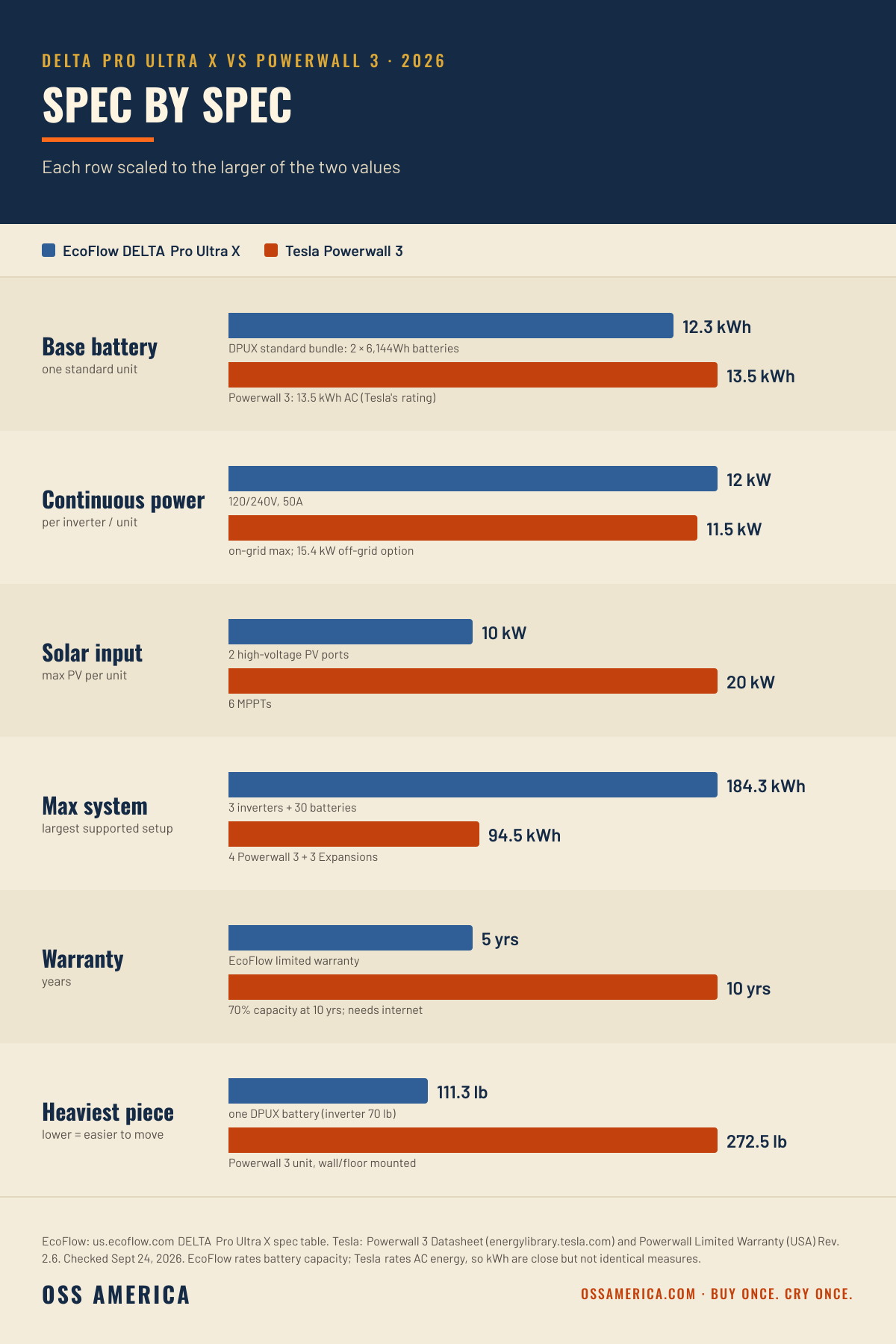
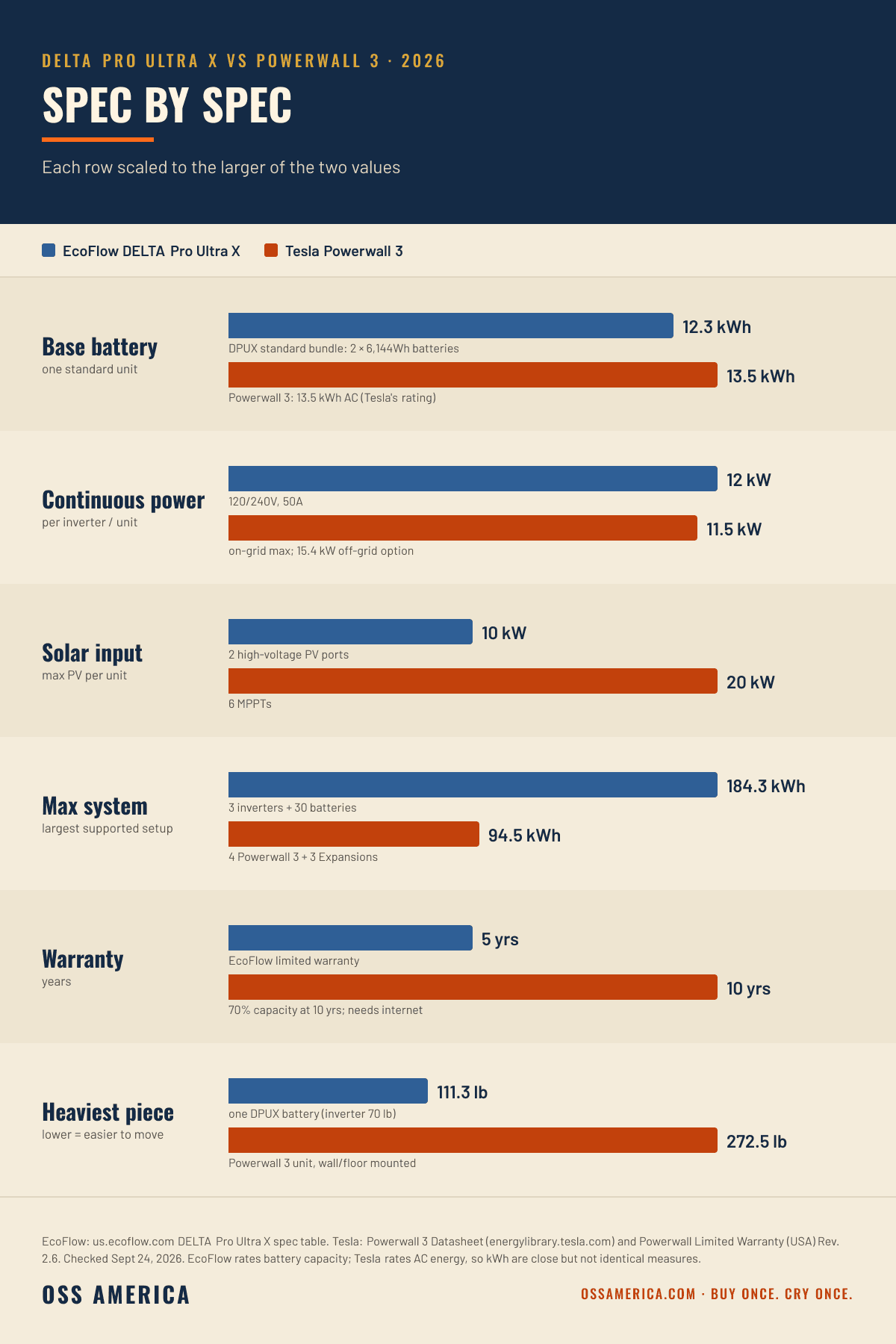
Read the chart row by row and the trade-off is clear. The Powerwall 3 wins on solar input and warranty: it has twice the solar capacity and twice the warranty term. The DELTA Pro Ultra X wins on expansion and handling: it scales to nearly twice the storage, and no single piece weighs more than about 111 lb. Base capacity and continuous power are close enough to call even. One caution on capacity: EcoFlow lists battery capacity, while Tesla lists AC energy, so the two kWh figures aren't measured exactly the same way.
EcoFlow DELTA Pro Ultra X: the expandable backup battery
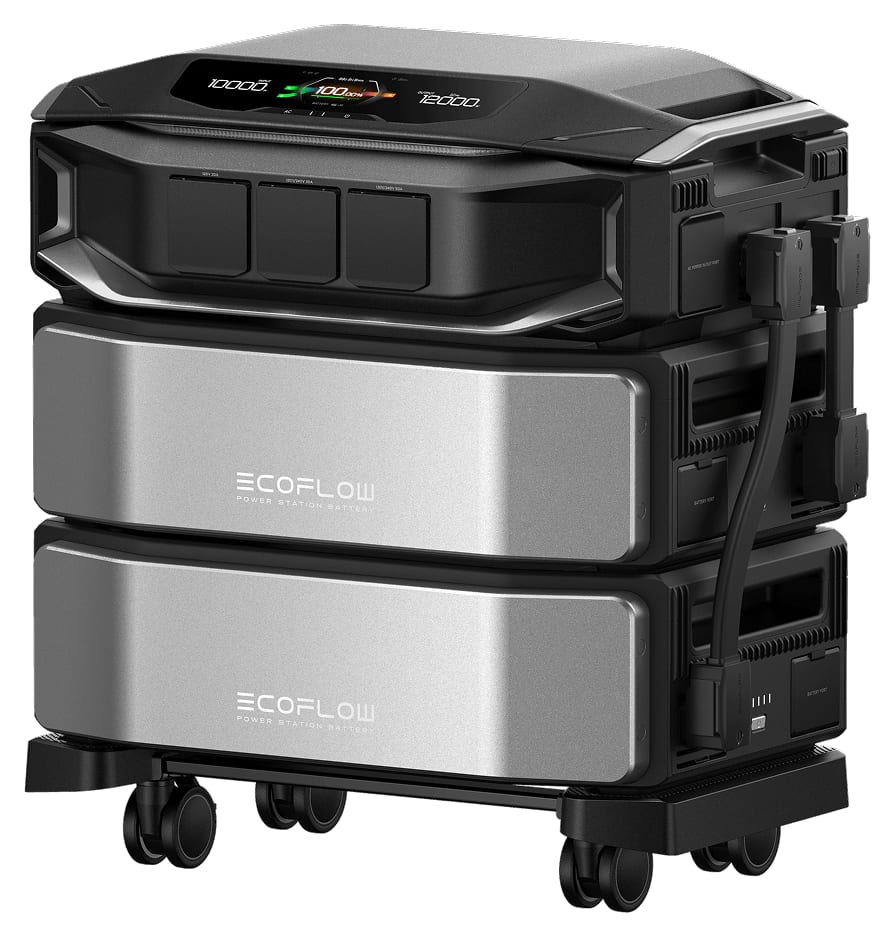
Key specs: 12.288 kWh (expandable to 184.3 kWh) · 12 kW at 120/240V · 10 kW solar input · under 10 ms UPS · 5-year warranty · $7,999, about $651 per kWh of battery
The DELTA Pro Ultra X is EcoFlow's biggest home system: a wide-body inverter stacked on LFP batteries, on wheels. The standard bundle is one inverter and two 6,144Wh batteries for $7,999. You can add up to ten batteries per inverter and link up to three inverters, for as much as 184 kWh and 36 kW. EcoFlow says batteries plug in without tools.
Its biggest advantage is how it installs. EcoFlow calls it a stand-alone, off-grid unit with no wall mounting, and says that makes approval simpler than a grid-tied system. For automatic whole-home switchover you add EcoFlow's Smart Home Panel 3 ($3,299 alone, or $10,999 bundled) or the Smart Gateway ($1,899), installed by an EcoFlow Authorized Installer. EcoFlow advertises a "7-day" install, but its fine print counts those days from when the permit is issued. Installation is quoted separately.
You can also run it without any panel work: the unit has 120V and 240V outlets on the front, including a 50A NEMA 14-50. Rooftop solar charging through the Smart Home Panel 3 or Gateway needs current transformers. For the full story, read our EcoFlow DELTA Pro Ultra X review.
DELTA Pro Ultra X: pros
- + Published price you can order today
- + Scales to 184 kWh and 36 kW
- + No wall mounting; pieces weigh 111 lb or less
- + Outlets on the unit, so it works before any panel work
- + Under 10 ms switchover standalone
DELTA Pro Ultra X: cons
- − 5-year warranty vs Tesla's 10
- − Half the solar input of a Powerwall 3
- − Automatic whole-home switchover needs a $1,899-$3,299 panel or gateway plus install
- − IP54 rating vs the Powerwall 3's IP67 battery and outdoor rating
Check DELTA Pro Ultra X price → See Smart Home Panel 3 bundles →
Tesla Powerwall 3: the solar-first home battery
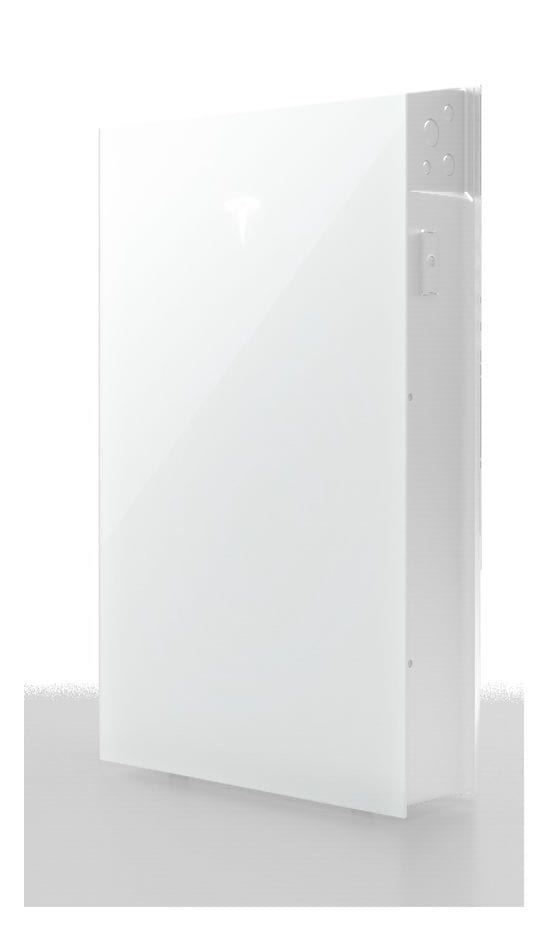
Key specs: 13.5 kWh AC · up to 11.5 kW continuous (15.4 kW off-grid option) · 185 LRA motor starting · 20 kW solar input, 6 MPPTs · 10-year warranty · indoor/outdoor, NEMA 3R
The Powerwall 3 is a battery and a solar inverter in one sealed, wall- or floor-mounted box. Tesla built it around solar: it takes up to 20 kW of panels directly, turns solar into household power at 97.5% efficiency, and runs about 89% round trip when it stores solar for later. Tesla rates it to start heavy loads up to 185 LRA (locked-rotor amps) and says a single unit can support the power needs of most homes. It's rated for indoor or outdoor installs, from -4°F to 122°F.
Its warranty is the strongest here. Tesla's US warranty covers defects for ten years and promises 70% of 13.5 kWh at ten years, with unlimited cycles for solar self-consumption, time-of-use shifting and backup. There are two conditions. The system must stay connected to the internet for the full ten years, or Tesla may limit it to four. And it must be bought from Tesla or a Tesla certified installer and installed in the US.
That also explains the pricing. The Powerwall 3 isn't a box you pick up and plug in. It weighs 272.5 lb, gets wired into your panel with a Tesla Gateway 3, Backup Switch or Backup Gateway 2, and is quoted as an installed system. Your price depends on your home, your electrical service and your installer, so get a written quote before you compare it to the EcoFlow.
Powerwall 3: pros
- + 10-year warranty with 70% capacity guarantee
- + Built-in 20 kW solar inverter with 6 MPPTs
- + 185 LRA starts heavy motor loads
- + Indoor/outdoor rated, IP67 battery
- + Can take part in utility grid services
Powerwall 3: cons
- − No published price we could verify; quoted per home
- − Must be professionally installed; 272.5 lb unit
- − Full warranty requires constant internet
- − Max 7 units (about 94.5 kWh with 4 Powerwalls + 3 Expansions)
Tesla Powerwall 3 on tesla.com →
What about the 30% federal tax credit?
It's gone for new installs. The IRS says the Residential Clean Energy Credit, which covered 30% of home battery storage costs, is not available for any property placed in service after December 31, 2025. So neither the DELTA Pro Ultra X nor the Powerwall 3 qualifies for that federal credit if it's installed in 2026. Ask your utility and state energy office about local rebates or battery programs, which vary by area.
Which should you buy?
Buy the EcoFlow DELTA Pro Ultra X if you mainly want outage backup, don't have solar (or plan a small array), and like knowing the hardware price up front. It's the better fit for people who may move and want to take it with them, rural homes that lean on a generator, and anyone who wants to start at 12 kWh and add batteries later. Budget for the Smart Home Panel 3 or Smart Gateway plus installation if you want the whole house to switch over on its own.
Buy the Tesla Powerwall 3 if you're installing solar, want a sealed battery that can live outdoors, and value a 10-year warranty over portability. Get quotes from Tesla and at least one other certified installer.
Weighing smaller options first? See our 15 best portable power stations of 2026 and our EcoFlow DELTA Pro Ultra whole-home backup guide.
Frequently asked questions
Is the EcoFlow DELTA Pro Ultra X better than the Tesla Powerwall 3?
Neither is better for everyone. The DELTA Pro Ultra X expands further (up to 184 kWh), has a published price and needs no wall mounting. The Powerwall 3 has twice the solar input, a 10-year warranty and an outdoor rating. For backup without solar, the EcoFlow is simpler. For a solar home, the Powerwall 3 is built for the job.
How much does the Tesla Powerwall 3 cost?
We couldn't verify a current price. Tesla's Powerwall pages didn't load for our research tools on September 24, 2026. The Powerwall 3 is sold and installed by Tesla or Tesla certified installers, so your price depends on your home and includes installation. Get a written quote.
How much does the EcoFlow DELTA Pro Ultra X cost?
$7,999 on us.ecoflow.com for one inverter and two batteries (about 12 kWh), or $10,999 bundled with the Smart Home Panel 3. Installation of the panel or gateway is priced separately.
Can I get the 30% tax credit on a home battery in 2026?
Not the federal residential one. The IRS says the Residential Clean Energy Credit isn't available for property placed in service after December 31, 2025. Check with your utility and state for local incentives.
Does the DELTA Pro Ultra X need an electrician?
Not to run appliances from its built-in outlets. For automatic whole-home backup, the Smart Home Panel 3 or Smart Gateway must be installed, and EcoFlow uses authorized installers. Use a licensed electrician for any connection to your home's wiring.
How big a system can each one become?
The DELTA Pro Ultra X goes up to 61.4 kWh on one inverter and 184.3 kWh and 36 kW with three inverters. The Powerwall 3 supports up to four Powerwall 3 units plus three Expansion units, seven units in all.
The bottom line
The DELTA Pro Ultra X and the Powerwall 3 overlap on capacity and power, but they solve different problems. The EcoFlow is a big, expandable backup battery with a price you can see today and no wall to mount it on. The Powerwall 3 is a permanent, solar-first home battery with the better warranty, priced as an installed system. Start with one question: are you adding solar? If yes, get Powerwall quotes. If you just want the lights and the well pump on in the next outage, the DELTA Pro Ultra X is the more direct path. And with the federal 30% credit gone for 2026 installs, run your numbers without it.
Talk soon,
OSS AMERICA
God · Family · Country · Gear that earns its keep.
Advertisement
FTC Disclosure: OSS America contains affiliate links. We earn a commission from qualifying purchases at no extra cost to you — we only point you at gear we'd stake our own trip on.
More reviews
 Portable Power
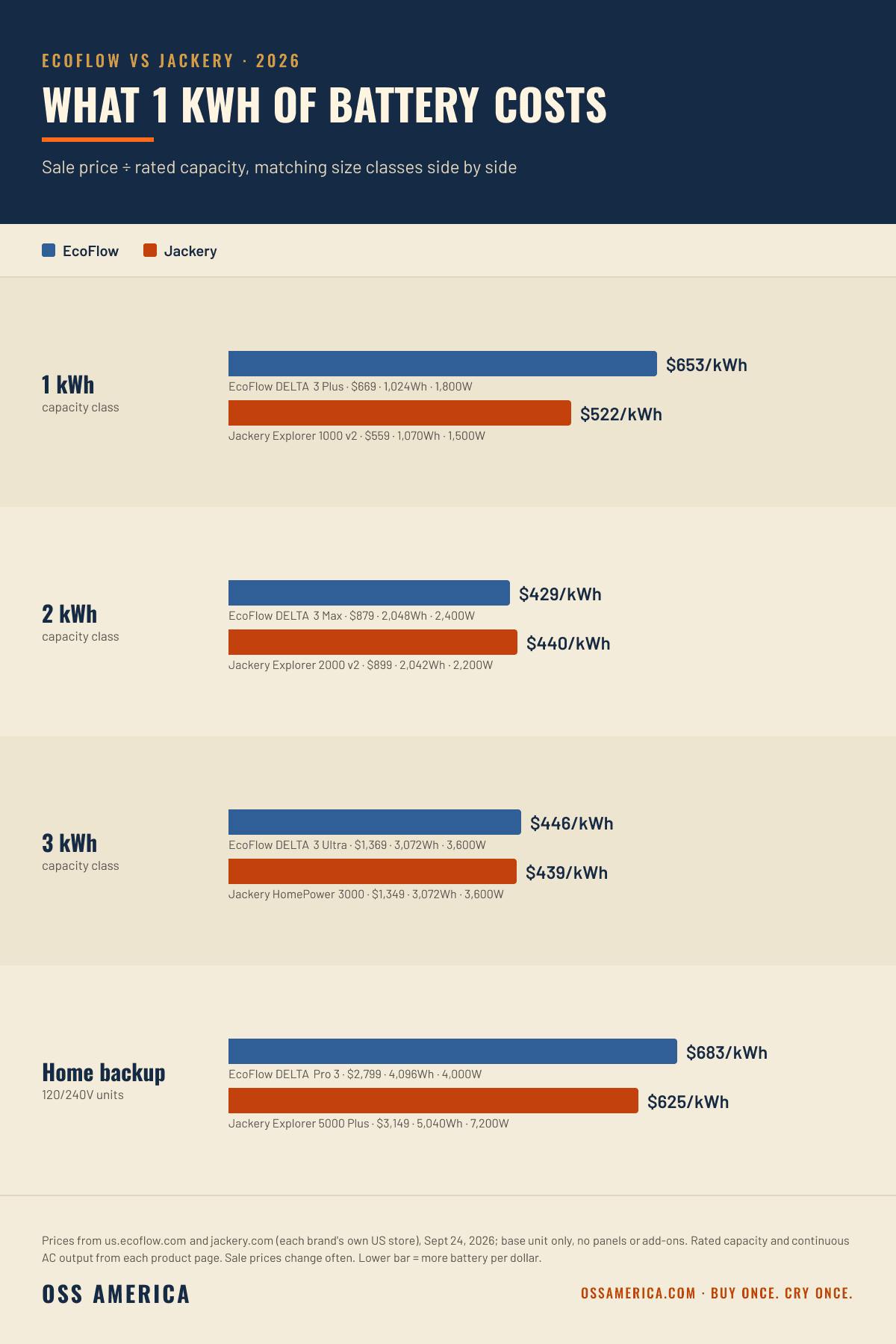
EcoFlow vs Jackery (2026): Which Power Station Gives You More for Your Money?
EcoFlow vs Jackery, compared size class by size class: price per kWh, output, weight, cycle ratings, warranty and returns for 1 kWh, 2 kWh, 3 kWh and 240V home backup units, plus which to buy.
 Portable Power
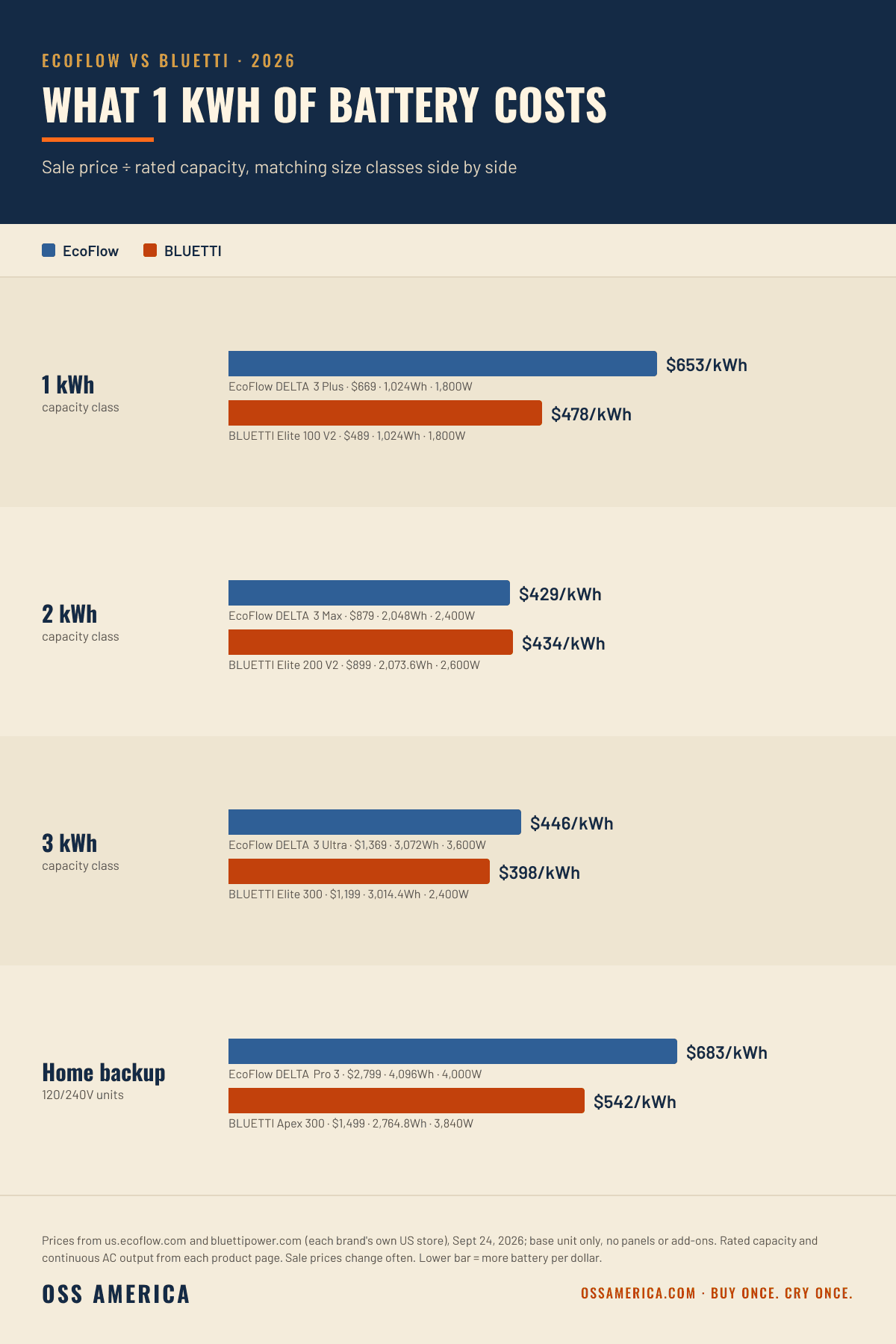
EcoFlow vs BLUETTI (2026): Which Power Station Gives You More for Your Money?
EcoFlow vs BLUETTI, compared size class by size class: price per kWh, output, weight, cycle ratings, warranty and returns for 1 kWh, 2 kWh, 3 kWh and 240V home backup units, plus which to buy.
 Portable Power
14 Best-Selling Home Power Products of 2026 (Not a Ranking)
Not a ranking — nobody won. Fourteen of the best-selling home power products on the market, with what each one actually does: the watts, the hours, the fuel, the install, and the honest limits. You decide which fits your house.
 Portable Power
Jackery Explorer 1000 v2 Review — The Honest Take (2026)
The Jackery Explorer 1000 v2 is one of the best portable power stations we've researched — but not for everyone. What it does great, where it falls short, and how it compares to EcoFlow, BLUETTI and Anker.
 Portable Power
The 15 Best Portable Power Stations of 2026 — Ranked for Camping, RV, and Home Backup
We researched 15 portable power stations across 5 use-case tiers — whole-home backup, off-grid RV, overlanding, camping, and solar — with picks for every budget from $400 to $5,000.
 Top PickPortable Power
16 Best Solar Generators For 2026
Sixteen solar generators, from budget LiFePO4 units to whole-home systems, counted down from #16 to #1 with the specs that matter and who each one suits.